







What's Happening?
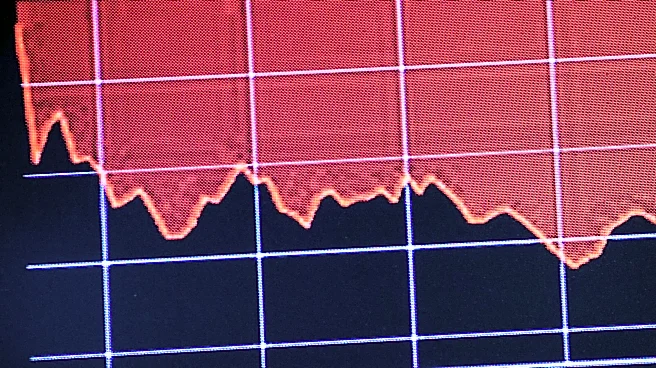
Celestica (CLS) stock experienced a significant 16.0% decline on Friday, November 20, 2026, closing at a one-year low of $201.80. This sharp drop occurred without any specific announcement, earnings report, or filing from the company. The broader S&P
500 also fell by 3.7% on the same day. Celestica, a technology company specializing in hardware for artificial intelligence, including networking gear, AI compute systems, and liquid-cooled AI racks for major cloud companies, saw its stock fall more steeply than its peers. While other electronic components makers worth $2 billion or more also experienced declines, with a median fall of 9.2%, Celestica's drop was more pronounced. The technology sector fund, XLK, lost 7.3%. Celestica's networking and computing business constituted 84% of its revenue in the third quarter of fiscal 2026, and management had projected $40 billion in revenue for 2027 due to high customer demand.
Why It's Important?
The substantial drop in Celestica's stock, exceeding that of its peers and the broader technology sector, highlights the volatility and potential investor apprehension within the AI hardware market. Despite strong revenue projections and significant involvement in AI infrastructure, the company's stock was heavily impacted by a wider sell-off in AI-related stocks. This indicates that even companies with robust fundamentals and high demand in emerging sectors are not immune to market-wide corrections or shifts in investor sentiment. The event could signal a period of increased scrutiny or caution from investors regarding valuations in the AI space, potentially affecting capital allocation and investment strategies across the technology sector. The disproportionate fall for Celestica, compared to its competitors, might also suggest specific concerns or a lack of investor confidence in its immediate outlook, even if not publicly disclosed.
What's Next?
Following the significant stock decline, investors will likely be closely watching Celestica for any official statements or disclosures that could explain the sharp sell-off. The company's performance in the coming trading sessions will be critical in determining if this was an isolated event or the beginning of a more sustained downturn. The broader AI sector will also be under observation, as continued sell-offs could indicate a market correction or a re-evaluation of AI stock valuations. Celestica's management may face pressure to reassure investors about its growth trajectory and market position, especially given its previous optimistic revenue forecasts for 2027. Any rebound in Celestica's stock could be influenced by overall market sentiment towards AI and technology stocks, as well as any new developments concerning its major cloud company clients.
Beyond the Headlines
This event underscores the inherent risks associated with investing in high-growth, speculative sectors like artificial intelligence, where market sentiment can trigger rapid and significant price movements even in the absence of company-specific news. The lack of a clear catalyst for Celestica's stock drop suggests that broader market dynamics, such as profit-taking or a shift in investor confidence in the AI boom, played a dominant role. This could lead to a re-evaluation of investment strategies, with a potential shift towards more diversified portfolios or a greater emphasis on fundamental analysis over speculative growth. Furthermore, the incident highlights the interconnectedness of the technology sector, where a sell-off in one area, like AI, can have ripple effects across related industries, including electronic components and networking hardware providers. It also raises questions about market efficiency and the speed at which information (or lack thereof) can influence stock prices.