



What's Happening?
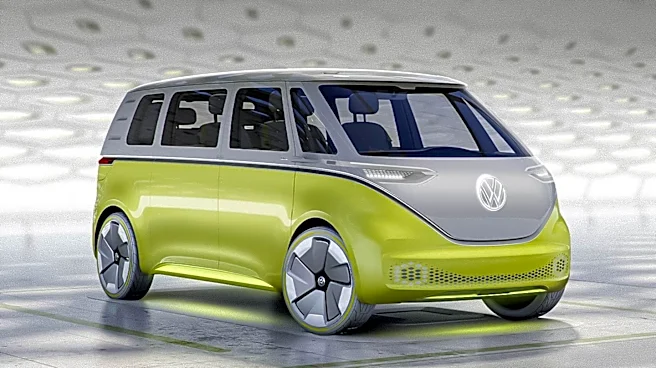
Volkswagen CEO Thomas Schäfer has announced that a second generation of the ID.Buzz electric van will be sold in the United States, with a focus on a lower price point. The current ID.Buzz, which debuted for the 2025 model year with a starting price of $61,545,
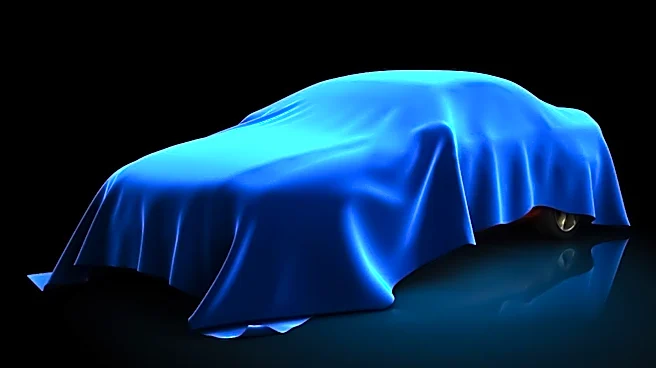
has seen its U.S. sales paused for the 2026 and 2027 model years due to its high cost and slow sales. Schäfer indicated that the next iteration, expected to return to the U.S. market in 2028, will utilize a new modular platform, the Scalable Systems Platform (SSP), and more cost-effective lithium-iron-phosphate batteries to achieve a more competitive price. The design of the new ID.Buzz is still under consideration, with VW design boss Andreas Mindt suggesting it will be 'interesting,' whether it retains retro cues or adopts a new direction.
Why It's Important?
This announcement is significant for the U.S. automotive market, particularly in the electric vehicle (EV) segment. The current ID.Buzz's struggle with sales due to its high price highlights a critical barrier to EV adoption in the U.S. By aiming for a more affordable second generation, Volkswagen is directly addressing consumer demand for lower-cost EVs, which could significantly boost its market share and competitiveness against other manufacturers. The adoption of the SSP platform and cheaper battery technology could set a precedent for cost-reduction strategies across the VW Group's entire EV lineup, potentially making electric vehicles more accessible to a broader range of American consumers. This move could also intensify competition in the electric minivan and family vehicle segments, pushing other automakers to innovate on price and features.
What's Next?
The ID.Buzz is expected to return to the U.S. market in 2028, following its hiatus for the 2026 and 2027 model years. Before its reintroduction, Volkswagen will need to finalize the design and engineering of the second-generation model, focusing on integrating the new SSP platform and lithium-iron-phosphate batteries. Consumers and industry analysts will be keenly watching for official pricing announcements and detailed specifications to assess the extent of the cost reduction and its impact on the vehicle's features and performance. Volkswagen will also need to develop a robust marketing strategy to re-engage the U.S. market and overcome the initial sales challenges. The success of the more affordable ID.Buzz could influence Volkswagen's broader EV strategy in the U.S. and potentially accelerate the transition to electric vehicles.
Beyond the Headlines
The Volkswagen ID.Buzz's journey reflects a broader challenge in the automotive industry: balancing nostalgic appeal with modern market demands, especially in the rapidly evolving EV sector. The initial ID.Buzz capitalized on the emotional connection to the classic Microbus, but its premium pricing alienated a significant portion of potential buyers. The shift towards affordability with the second generation indicates a strategic pivot, acknowledging that 'vibes only go so far' and that practical considerations like price are paramount for mass adoption. This situation highlights the tension between design-driven marketing and cost-effective engineering in the EV space. It also underscores the importance of battery technology advancements in making EVs more accessible. The eventual design direction—whether retaining retro elements or embracing a new aesthetic—will also be a cultural barometer for how consumers perceive the evolution of iconic vehicles in an electric future.