


What's Happening?
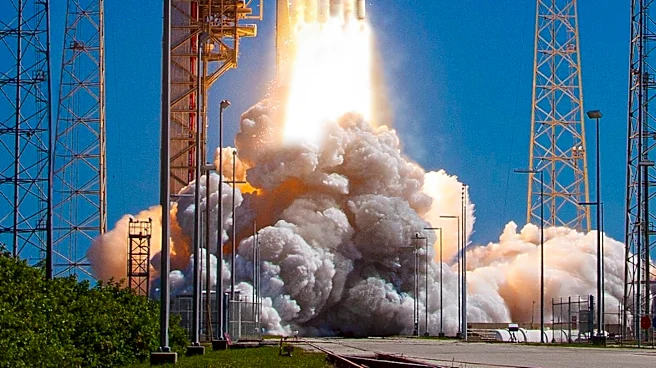
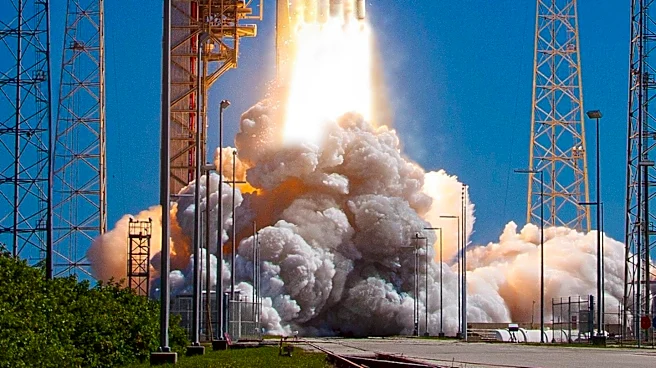
Amazon is accelerating its launch schedule with SpaceX's Falcon 9 rockets for its Project Kuiper broadband satellite constellation, following a recent failure of United Launch Alliance's (ULA) Vulcan rocket. On November 15, a ULA Vulcan rocket malfunctioned,
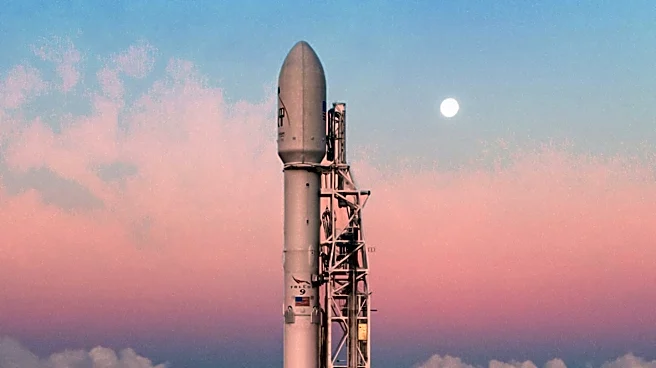
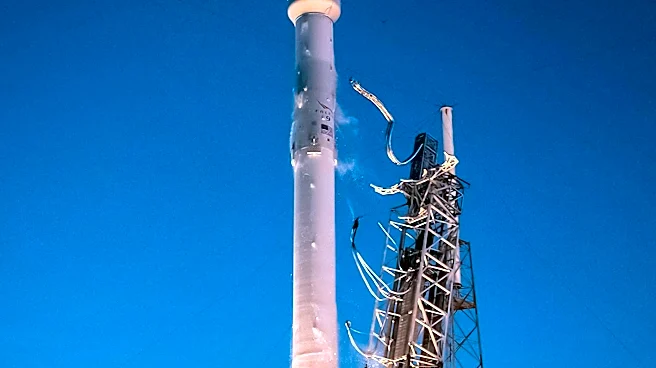
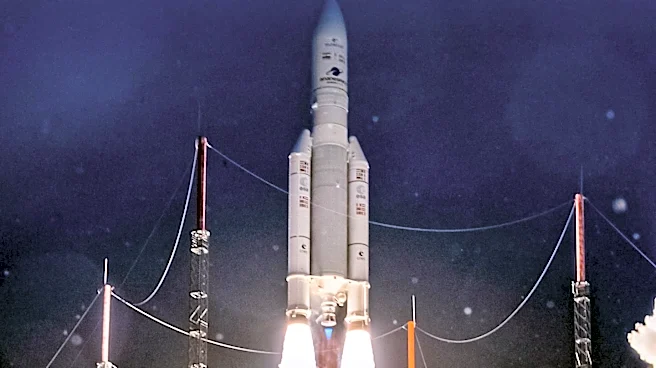
resulting in the loss of 40 Amazon satellites. This incident has grounded the Vulcan rocket for an indefinite period while the Federal Aviation Administration investigates. In response, Amazon successfully launched 36 Kuiper satellites on a European Ariane 6 launcher on Tuesday, bringing its total fleet to 432 satellites. An Amazon official confirmed that the next Falcon 9 launch for Project Kuiper is now scheduled for December, moved up from its original date next year, with several more Falcon 9 launches to follow in quick succession. Amazon had initially secured 108 launch flights across various providers, including ULA, Arianespace, and Blue Origin, for its planned 3,232-satellite constellation.
Why It's Important?
This shift in launch strategy is critical for Amazon's Project Kuiper, as it aims to compete with SpaceX's Starlink in the satellite broadband market. The loss of 40 satellites and the grounding of ULA's Vulcan rocket represent a significant setback, potentially delaying Kuiper's deployment timeline and increasing costs. By accelerating launches with SpaceX, Amazon is demonstrating its commitment to rapidly building out its constellation and mitigating the impact of launch vehicle unreliability from other providers. This move also highlights the competitive dynamics within the space launch industry, where SpaceX's Falcon 9 has proven to be a reliable and readily available option. The incident underscores the inherent risks in developing new launch vehicles and the importance of diversified launch contracts for large-scale satellite deployments. For ULA, the Vulcan failure is a major blow, impacting its reputation and future launch manifest.
What's Next?
Amazon plans to proceed with a rapid cadence of Falcon 9 launches, starting in December, to deploy more Kuiper satellites. The ULA Vulcan rocket will remain grounded pending the outcome of the FAA investigation, which could take several months. This will likely lead to further delays for Amazon's planned 38 flights on Vulcan. Blue Origin's New Glenn rocket, another launch provider for Amazon, is also currently grounded after a launch pad explosion in May, though flights could resume early next year. Amazon will continue to rely on Arianespace's Ariane 6, which successfully launched 36 satellites, for its European launch needs. The company's ability to quickly pivot to alternative launch providers, particularly SpaceX, will be crucial in maintaining momentum for Project Kuiper and achieving its deployment goals to begin offering internet services.
Beyond the Headlines
The challenges faced by Amazon in deploying Project Kuiper highlight broader issues within the commercial space industry, particularly the reliance on nascent launch technologies. Many of Amazon's initial launch contracts were with rockets still in development, such as ULA's Vulcan, Europe's Ariane 6, and Blue Origin's New Glenn. While diversification of launch providers is a sound strategy, it also exposes companies to the inherent risks and delays associated with new rocket development. The situation underscores the dominance of SpaceX's Falcon 9 as a mature and reliable workhorse in the current launch market. Furthermore, the incident raises questions about the long-term viability and competitiveness of other launch providers if they cannot consistently deliver on their commitments. The European taxpayer subsidies for Ariane 6 flights, even for commercial payloads like Amazon's, also bring into focus the economic and political dimensions of international space collaboration and competition.