



What's Happening?
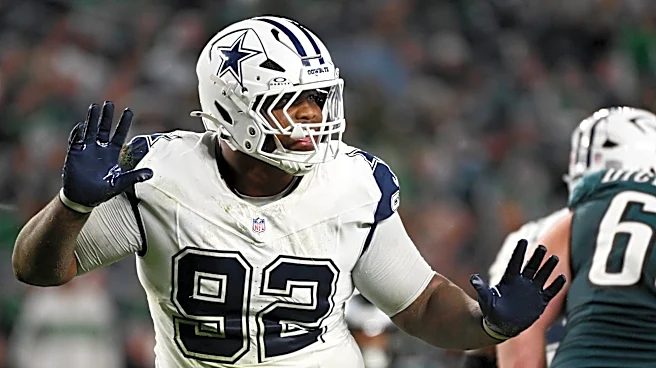
Dallas Cowboys owner Jerry Jones has stated that the team will only consider making a trade before the November 10 deadline if it involves a "dynamic situation to give up picks." This announcement comes as the Cowboys' defense has significantly underperformed
this season, ranking 23rd in points allowed (25.7 points per game) and 29th in yards allowed per game (373.7) through seven games of the 2026 regular season. Despite a top-10 offense, the team holds a 3-4 record, struggling to close out games due to defensive vulnerabilities. Jones's condition for trades suggests a cautious approach to roster changes, prioritizing significant impact over minor adjustments, especially given past investments in defensive players like Joey Porter Jr. and Quinnen Williams.
Why It's Important?
Jones's stance on trades is critical for the Dallas Cowboys' immediate season outlook and long-term strategy. The team's defensive struggles are a major impediment to their Super Bowl aspirations, a goal Jones has frequently emphasized. By setting a high bar for trades, Jones indicates a reluctance to part with valuable draft capital unless a player can dramatically alter the team's fortunes. This approach could either preserve future assets for sustained competitiveness or be seen as a missed opportunity to address current deficiencies in a tight NFC East race. The decision impacts not only the team's performance but also fan morale and the financial implications of potential player acquisitions or retained draft picks.
What's Next?
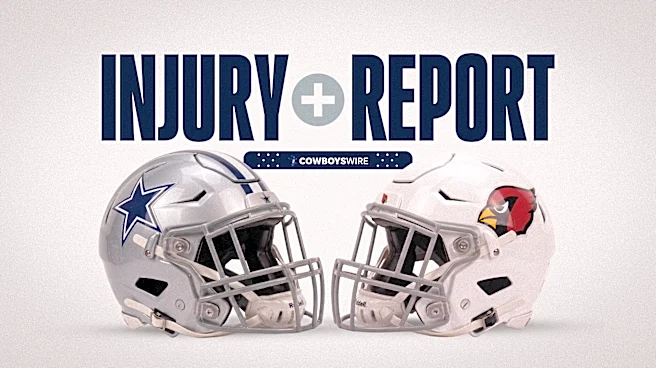
The Cowboys are scheduled to play the Arizona Cardinals and the Indianapolis Colts in Week 8 and Week 9, respectively, before the November 10 trade deadline. The outcomes of these games could significantly influence Jones's final decision on whether to pursue a trade. Should the defensive struggles persist or worsen, the pressure to make a move might intensify, potentially leading Jones to reconsider his stringent conditions. Conversely, strong defensive performances could reinforce his current cautious approach. The team's performance in these upcoming games will be a crucial factor in determining if any "dynamic situation" arises that meets Jones's criteria for giving up draft picks.
Beyond the Headlines
Jones's decision-making process reflects a broader tension in professional sports between immediate competitive needs and long-term team building. His emphasis on a "dynamic situation" for trades highlights the high value placed on draft picks as foundational elements for future success. This strategy, while potentially preserving future talent, also carries the risk of failing to capitalize on a window of opportunity for a championship run, especially with a strong offensive core already in place. The ongoing struggle to balance these priorities will continue to shape the Cowboys' roster construction and competitive trajectory, influencing how other NFL teams approach similar dilemmas.