





What's Happening?
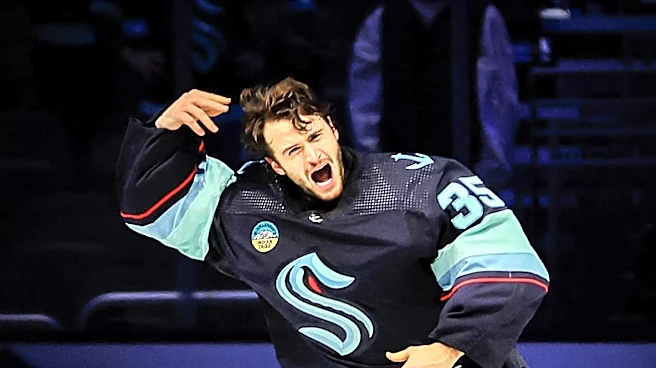
The Seattle Kraken are navigating a challenging offseason as they attempt to improve their NHL team, which finished 34-37-11 last season. Despite having cap space and assets, the team has made limited moves, re-signing Bobby McMann and acquiring Mackie
Samoskevich, while losing Jaden Schwartz and Jamie Oleksiak. The Kraken's strategy appears focused on long-term growth, relying on young talent development rather than immediate upgrades. However, unresolved issues, such as the Shane Wright situation, and a roster with aging players, complicate their path to becoming a competitive team.
Why It's Important?
The Kraken's current position reflects broader challenges faced by expansion teams in establishing a competitive presence in the NHL. Their strategy of focusing on young talent development over immediate success could influence other teams in similar situations. The team's decisions this offseason may impact their ability to attract free agents and maintain fan engagement, especially in a city with a history of sports team struggles. The Kraken's approach could serve as a case study for balancing long-term growth with the need for short-term competitiveness in professional sports.
What's Next?
The Kraken's management will likely continue to evaluate their roster and make strategic decisions aimed at long-term success. This may involve further trades or acquisitions to align with their young core's development timeline. The team's performance in the upcoming season will be closely watched, as it could determine future management and coaching decisions. Additionally, the Kraken's ability to foster a winning culture will be crucial in maintaining fan support and attracting talent.