
What's Happening?
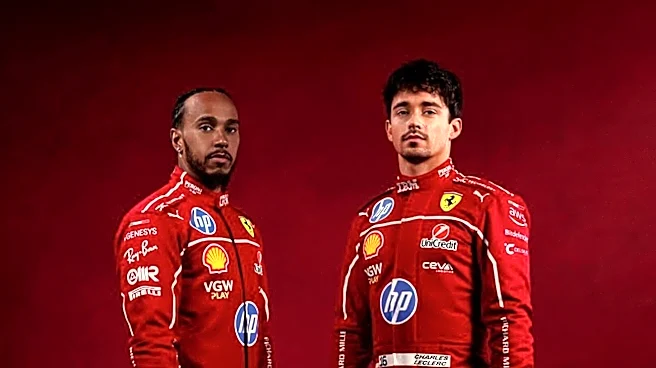
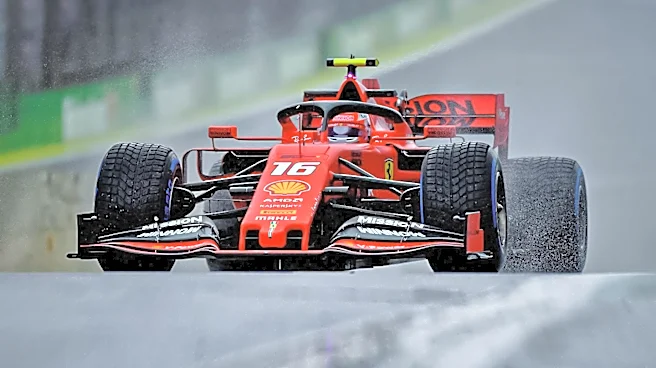
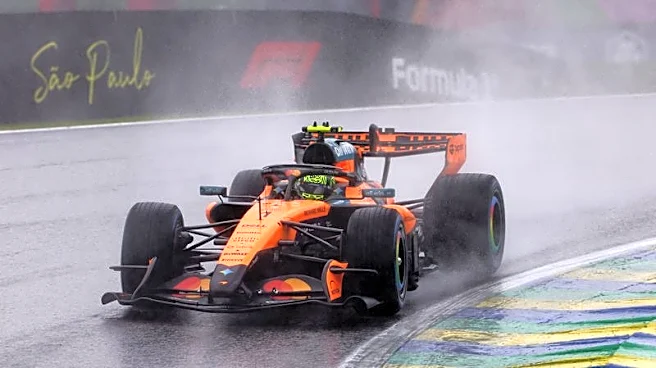
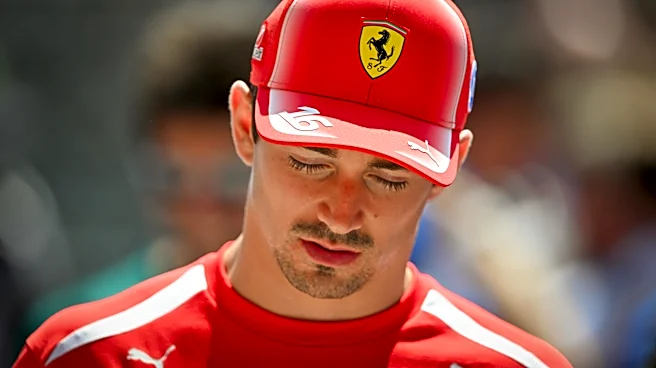
Ferrari driver Charles Leclerc has been issued a five-second time penalty for causing a collision with Liam Lawson of Racing Bulls during the Brazilian Grand Prix. The incident occurred as Leclerc attempted
an overtake at Juncao, resulting in contact between his car and Lawson's. Although Leclerc initially finished in seventh place, the penalty dropped him to eighth in the final classification, placing him behind Lawson. The FIA stewards investigated the contact, noting that while it was minor, it disrupted Lawson's car and allowed Leclerc to gain an advantage and subsequently overtake. Lawson reported that the contact damaged his rear left rim. The stewards considered the wet track conditions as a mitigating factor, leading to a five-second penalty instead of a more severe ten-second penalty.
Why It's Important?
This penalty impacts the final standings of the Brazilian Grand Prix and has implications for both drivers and their respective teams. For Charles Leclerc and Ferrari, losing a position, even one, can affect championship points, especially in a tightly contested season. For Liam Lawson, gaining a position due to the penalty is a positive outcome, potentially boosting his confidence and team's morale. Such decisions by race stewards underscore the strict regulations governing on-track conduct in Formula 1, emphasizing fair play and the responsibility of drivers to avoid collisions. It also highlights the subjective nature of racing incidents, where minor contact can still lead to significant penalties if deemed to have provided a sporting advantage.
What's Next?
Following the penalty, the revised results of the Brazilian Grand Prix are now official. For Charles Leclerc and Ferrari, the focus will likely shift to analyzing the incident and potentially adjusting racing strategies to avoid similar penalties in future races. Liam Lawson and Racing Bulls will benefit from the improved finishing position. The incident may also spark further discussions within the Formula 1 community regarding racing standards and the interpretation of contact rules, especially in challenging wet conditions. Teams will continue to prepare for upcoming races, with drivers aiming to maximize points while adhering to the FIA's sporting regulations.
Beyond the Headlines
The incident between Leclerc and Lawson, though seemingly minor, touches upon broader themes in motorsport regarding aggressive driving versus fair racing. Lawson himself compared Leclerc's move to a past incident in GP2, suggesting a pattern in Leclerc's overtaking style. This raises questions about how drivers balance the competitive urge to gain positions with the need to maintain safe and legal racing conduct. The stewards' decision to consider wet conditions as a mitigating factor also highlights the complexities of officiating in dynamic racing environments, where track conditions can significantly influence driver control and incident outcomes. Such penalties contribute to the ongoing narrative of driver reputations and team strategies in the high-stakes world of Formula 1.