

What's Happening?
Sisters Angel and Ariel Su undertook a significant renovation of their 32-year-old, 498-square-foot apartment in Taipei to create a functional and comfortable shared living space. Angel, who primarily resides in Shanghai, desired a vacation-home feel,
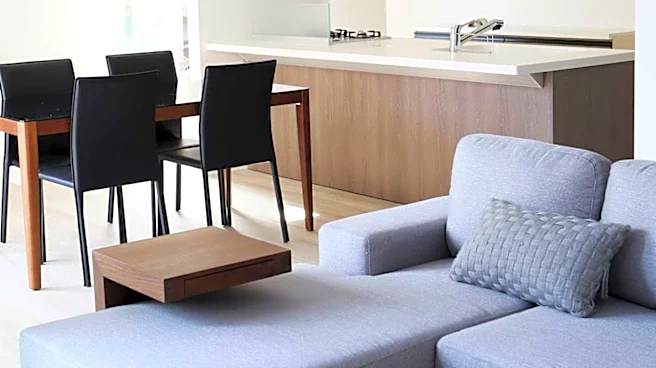
while Ariel, living in Taipei, sought a comfortable permanent residence for herself and their shared cat, Cooper. The apartment, located in the Songshan District, was initially dated with dull laminate flooring, old wood balustrades, a tiny kitchenette, and an enclosed balcony. Working with designer Jennifer Hu of NNEE Studio, they transformed the space. Key changes included opening up the bedroom to the kitchen and living area, utilizing the 11-foot ceilings to create a mezzanine for a second sleeping area, and incorporating custom-made furniture. The custom bed platform, for instance, was designed to store three large suitcases, catering to their frequent travel. The renovation aimed to maximize the small footprint, making it livable for both sisters and accommodating visits from their mother.
Why It's Important?
This renovation project highlights the growing trend of multi-generational or shared living arrangements, particularly in urban centers where space is at a premium. The sisters' approach to design, focusing on functionality, custom solutions, and aesthetic appeal, offers a blueprint for maximizing small living spaces. It underscores the importance of thoughtful interior design in enhancing quality of life and accommodating diverse needs within a single household. The use of custom furniture, such as the bed platform with integrated storage, demonstrates how tailored solutions can address specific challenges like limited space and storage requirements for frequent travelers. This project also reflects a broader shift towards more flexible and adaptable home environments, where spaces can serve multiple purposes. For the design industry, it showcases the demand for innovative solutions for compact living, encouraging designers to think creatively about spatial efficiency and multi-functional elements. The success of their collaboration also emphasizes the value of professional design expertise in mediating different personal preferences to achieve a cohesive and practical outcome.
What's Next?
As urban populations continue to grow and housing costs remain high, the demand for innovative small-space living solutions is expected to increase. This will likely drive further advancements in modular furniture, convertible spaces, and integrated storage systems. Designers and architects will continue to explore creative ways to maximize functionality and comfort in compact apartments, potentially leading to new trends in micro-living and co-living designs. The market for custom-built furniture and smart home technologies that optimize space and convenience will also likely expand. We may see more developers incorporating flexible layouts and multi-purpose rooms into new apartment constructions. Additionally, the success of such renovations could inspire more individuals and families to invest in professional design services to transform their smaller homes into highly efficient and aesthetically pleasing environments, further boosting the interior design and home renovation sectors focused on urban living.
Beyond the Headlines
Beyond the practical aspects of design, this renovation touches upon deeper societal trends related to family dynamics and urban living. The sisters' decision to share an apartment, despite one living abroad, reflects evolving family structures and the desire to maintain close ties. It also highlights the economic realities that often necessitate shared living arrangements in expensive cities like Taipei. The transformation of a dated apartment into a modern, functional home speaks to the potential for revitalization within existing urban infrastructure, promoting sustainability by repurposing older buildings rather than always building new ones. Ethically, the project demonstrates how design can foster harmony and compromise in shared living, creating spaces that cater to individual needs while promoting communal well-being. Culturally, it underscores the universal human need for a comfortable and personalized home, regardless of its size, and how thoughtful design can profoundly impact daily life and relationships within that space.