


What's Happening?
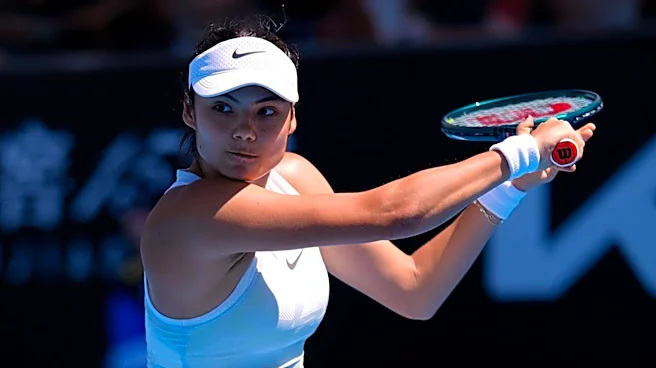
Emma Raducanu, the 2021 US Open champion, has been drawing inspiration from Andre Agassi's autobiography, 'Open,' to cope with her current performance challenges and a series of injuries. Agassi, an eight-time Grand Slam winner, has responded to Raducanu's
comments by offering advice, emphasizing the importance of focusing on personal best rather than external results. Raducanu has not reached the last eight of a major tournament since her US Open victory and has faced significant time off due to injuries, including a stress fracture in her right leg. Agassi's autobiography details his own struggles and comeback in the late 1990s, a narrative that Raducanu found particularly relatable. Agassi expressed that he is pleased his book continues to offer hope and guidance to current players.
Why It's Important?
This interaction highlights the mental and physical pressures faced by elite athletes, particularly those who achieve early, significant success like Raducanu. Agassi's advice underscores a critical aspect of sports psychology: maintaining self-identity and intrinsic motivation amidst public scrutiny and performance fluctuations. For young athletes, especially in individual sports like tennis, the transition from a breakthrough moment to sustained success can be fraught with challenges, including managing expectations, dealing with injuries, and navigating media attention. Agassi's message about not judging effort solely by results offers a valuable perspective that can help athletes develop resilience and a healthier relationship with their careers, potentially extending their longevity in the sport and mitigating the psychological toll of professional competition.
What's Next?
Emma Raducanu is currently preparing for a return to tennis after her injury hiatus, though her participation in upcoming tournaments like the China Open remains uncertain. Her continued engagement with Agassi's philosophy suggests a focus on mental fortitude and a structured approach to her comeback. The impact of Agassi's advice could influence how Raducanu approaches her training, competition, and public perception, potentially leading to a more sustainable and mentally healthy career trajectory. Other young athletes facing similar pressures may also find inspiration in this exchange, potentially leading to a broader discussion within the sports community about athlete well-being and long-term development beyond immediate results. Agassi's continued role as a mentor, even through his published works, reinforces the intergenerational support within professional tennis.
Beyond the Headlines
The broader implication of this story extends to the psychological demands of high-performance careers across various fields, not just sports. The narrative of a successful individual grappling with a 'slump' and seeking wisdom from a predecessor is a universal theme. Agassi's emphasis on 'being comfortable in your own identity' and not letting external opinions dictate self-worth touches upon fundamental aspects of mental health and self-acceptance. In an era dominated by social media and constant public evaluation, this message is particularly resonant for young professionals who often face immense pressure to maintain an image of continuous success. The story subtly critiques the results-driven culture prevalent in many competitive environments, advocating for a more holistic view of effort and personal growth.