
What's Happening?
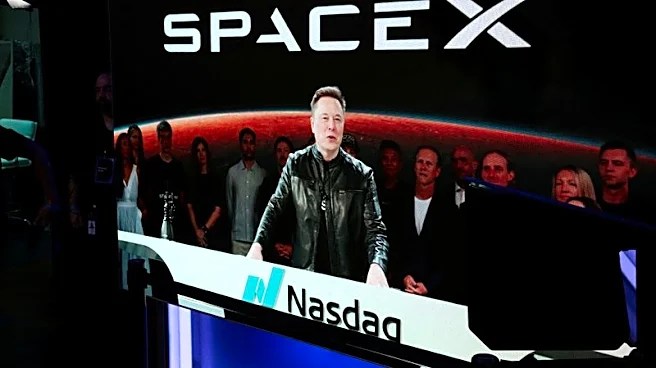
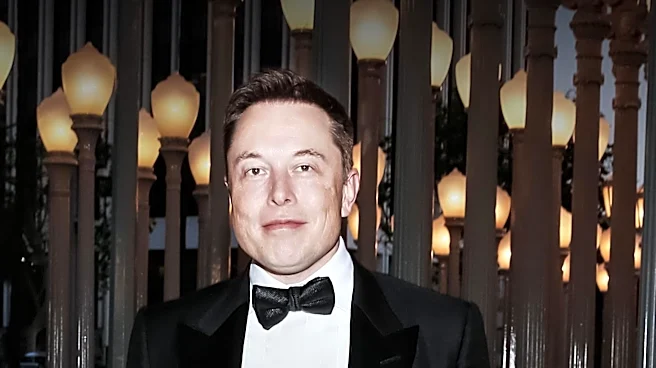
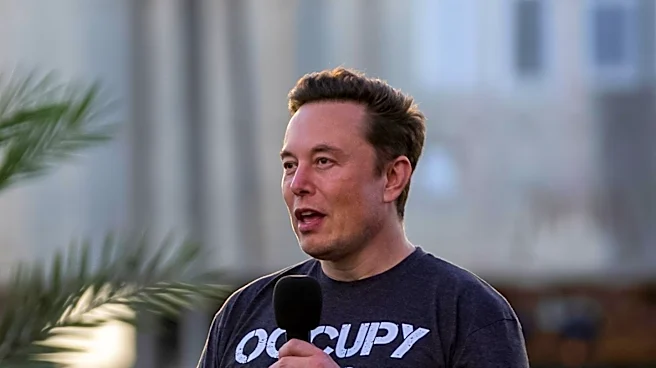
Elon Musk briefly achieved trillionaire status earlier this year after SpaceX's Initial Public Offering (IPO) in June. Following this milestone, Musk has made a bold claim that he could reach a net worth
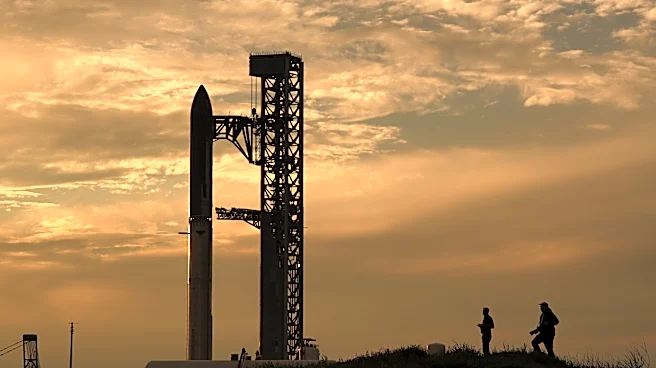
of $10 trillion in the future. He attributes the majority of his wealth to his stakes in Tesla Inc. and SpaceX. In July, the SpaceX CEO had also predicted that SpaceX could become more valuable than the entire planet if the company successfully achieves its ambitious goals. This includes a reiterated goal of reaching 1 Petawatt of power annually, with plans to source solar manufacturing equipment for the Starmind AI compute satellite constellation, which Musk believes will help create a 'sentient sun.' He stated that SpaceX aims for 1 Terawatt per year from Earth, rising to over 1 Petawatt per year from the Moon, emphasizing the vast potential of space.
Why It's Important?
Elon Musk's attainment of trillionaire status and his projection of reaching $10 trillion highlight the immense wealth generation potential within the technology and space exploration sectors. This development underscores the significant financial impact of companies like Tesla and SpaceX, which are at the forefront of electric vehicles, artificial intelligence, and commercial spaceflight. Such unprecedented wealth accumulation by an individual can influence investment trends, directing capital towards high-risk, high-reward ventures in emerging technologies. It also raises discussions about wealth concentration and its broader economic implications. The ambitious goals for SpaceX, particularly regarding energy generation from the Moon, could drive innovation in renewable energy and space infrastructure, potentially creating new industries and job markets in the U.S. and globally.
What's Next?
In the immediate future, continued focus will be on the performance of Tesla Inc. and SpaceX, as Musk's net worth is largely tied to these companies. SpaceX's progress towards its ambitious goals, such as achieving 1 Petawatt of power annually from the Moon and the development of the Starmind AI compute satellite constellation, will be closely watched. These projects could attract further investment and partnerships, potentially accelerating advancements in space technology and renewable energy. Musk's public statements and future ventures will likely continue to influence market sentiment and investment strategies in the tech and space sectors. The long-term implications involve the potential for SpaceX to become a dominant force in space resource utilization and energy production, which could reshape global energy landscapes and economic power dynamics.
Beyond the Headlines
Musk's vision extends beyond mere financial accumulation; his pursuit of a $10 trillion net worth is intertwined with his broader ambition to advance humanity to a Kardashev II civilization, capable of harnessing all of the Sun's power. This long-term vision suggests a profound shift in how humanity interacts with energy and space resources. The concept of SpaceX becoming 'worth more than Earth' reflects a philosophical outlook on the boundless potential of space. This narrative could inspire a new generation of scientists, engineers, and entrepreneurs to pursue ambitious goals in space exploration and sustainable energy. However, it also raises ethical questions about the distribution of wealth and resources, and the potential for private entities to wield unprecedented influence over global development and future human endeavors.