









What's Happening?
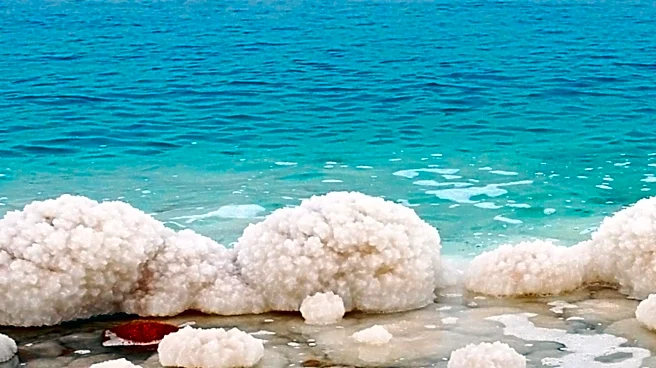
Visitors to the Dead Sea are advised to take precautions due to the sharp nature of its salt crystals. Unlike typical snow, Dead Sea salt does not melt and can cause discomfort if not properly managed. Travelers are specifically recommended to pack water
shoes to protect their feet from the genuinely sharp crystals underfoot. Additionally, it is advised to limit floating time to no more than fifteen to twenty minutes, avoid shaving before entering the water, and prevent contact with the eyes. Prompt rinsing with fresh water immediately after exiting the Dead Sea is crucial to mitigate any irritation caused by the salt. These recommendations are part of broader travel tips for visiting Jordan's key attractions, including Petra and Wadi Rum, emphasizing preparation for a more comfortable experience.
Why It's Important?
The unique properties of Dead Sea salt, particularly its sharp crystalline structure, highlight a significant aspect of environmental interaction and personal safety for tourists. This information is vital for the tourism industry in regions bordering the Dead Sea, as it directly impacts visitor experience and satisfaction. Ensuring tourists are aware of these precautions can prevent negative incidents, such as skin irritation or cuts, which could otherwise deter future visits or generate unfavorable reviews. For individuals, understanding these characteristics is crucial for a safe and enjoyable experience, emphasizing the need for specific gear like water shoes and adherence to recommended practices like limited exposure and immediate rinsing. This also underscores the distinct geological and chemical composition of the Dead Sea compared to other bodies of water, making it a unique natural phenomenon that requires specific considerations for human interaction.
What's Next?
As tourism to the Dead Sea continues, it is anticipated that travel advisories and local guides will increasingly emphasize these practical precautions. Educational campaigns by tourism boards and tour operators could further disseminate information regarding the use of water shoes, recommended floating durations, and the importance of post-swim rinsing. Resorts and facilities along the Dead Sea may enhance their infrastructure to provide more accessible fresh water rinsing stations and clearer signage detailing safety guidelines. Furthermore, there might be a focus on developing or promoting specialized footwear designed for the Dead Sea environment. The ongoing management of visitor expectations and safety will be key to sustaining the Dead Sea's appeal as a unique travel destination, ensuring that its distinct natural characteristics are appreciated without compromising visitor well-being.
Beyond the Headlines
The necessity of specific precautions when interacting with Dead Sea salt crystals extends beyond immediate physical comfort, touching upon broader themes of human adaptation to extreme natural environments and the delicate balance of ecological tourism. The Dead Sea's hypersaline environment, while offering therapeutic benefits, also presents unique challenges that necessitate a respectful and informed approach. This situation subtly highlights the contrast between natural phenomena and human expectations, where a seemingly benign activity like floating requires careful planning due to the environment's inherent characteristics. It also underscores the role of local knowledge and guidance in navigating such unique landscapes, transforming a simple visit into an experience that requires active engagement with environmental realities. The continuous need for such advisories reflects an ongoing dialogue between human leisure and the raw, untamed aspects of nature.