








What's Happening?
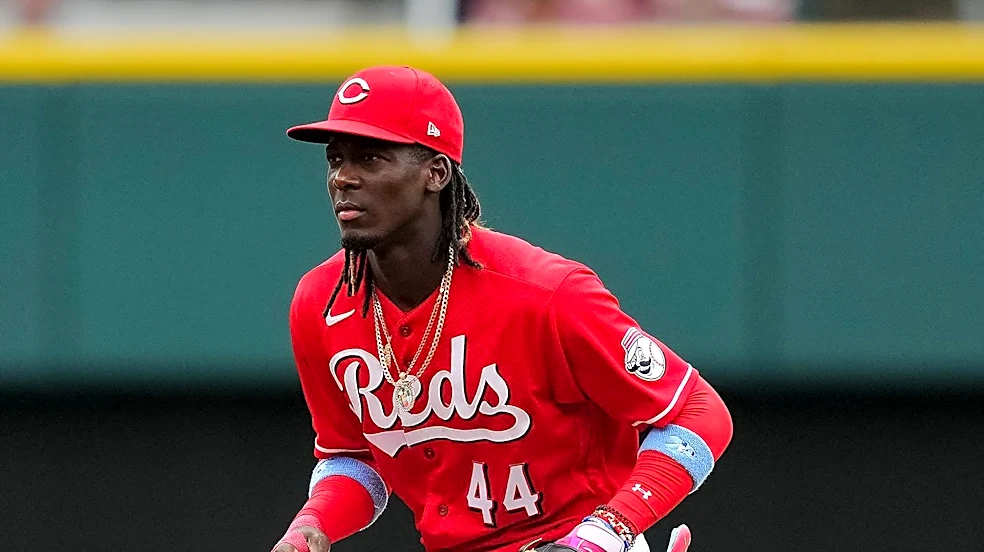
Cincinnati radio host Lance McAlister has publicly suggested that the Cincinnati Reds should consider trading their star shortstop, Elly De La Cruz. McAlister argues that the Reds will not be in a position to contend for a championship with De La Cruz in 2027
or 2028, and that the team will likely be unable to afford him when he reaches free agency after the 2029 season. He believes that trading De La Cruz sooner rather than later would maximize the return for the organization, allowing them to acquire a better package of prospects and assets. This proposal comes amidst ongoing discussions about the Reds' long-term competitiveness and their ability to build a winning team around their young talent, rather than continuously undergoing rebuilds.
Why It's Important?
The suggestion to trade Elly De La Cruz, a prominent young star, highlights a significant philosophical debate within the Cincinnati Reds organization and its fanbase: whether to commit to building around existing talent or to pursue another rebuild. De La Cruz represents a cornerstone player, and trading him would signal a lack of confidence in the team's ability to contend in the near future or to retain him long-term. This decision has profound implications for fan morale, season ticket sales, and the overall perception of the franchise. For a team that has struggled to achieve consistent success, another rebuild could further alienate a fanbase already weary of waiting for a winning product. It also raises questions about the organization's financial commitment to retaining star players and its strategy for sustained competitiveness in a challenging market.
What's Next?
While McAlister's proposal is currently a media suggestion, it puts pressure on the Cincinnati Reds' front office to clearly articulate their long-term strategy for Elly De La Cruz and the team as a whole. The organization will need to decide whether to actively pursue an extension with De La Cruz, signaling their intent to build around him, or to explore trade opportunities, which would likely involve a significant return of prospects. Regardless of the decision, the Reds must address their broader roster deficiencies, including improving their pitching, defense, and overall offensive production, to convince fans that a winning future is attainable. The coming offseason will be critical in shaping the team's direction and determining whether they can leverage their young talent into a competitive roster or if another period of rebuilding is on the horizon.
Beyond the Headlines
The debate surrounding Elly De La Cruz's future with the Cincinnati Reds touches upon the complex economics of modern baseball, particularly for small-market teams. The escalating salaries of star players often force organizations to make difficult choices about retaining talent versus maximizing trade value. McAlister's argument, while controversial, reflects a pragmatic view that if a team cannot afford to keep a star player long-term or build a winning team around them within their contract window, it might be more beneficial to trade them for assets that can contribute to a more sustainable future. This situation also highlights the tension between a team's desire for competitive success and the financial realities of operating in MLB, often leading to cycles of rebuilding that test the patience of both players and fans. The Reds' ultimate decision will be a significant indicator of their organizational philosophy and financial health.