





What's Happening?
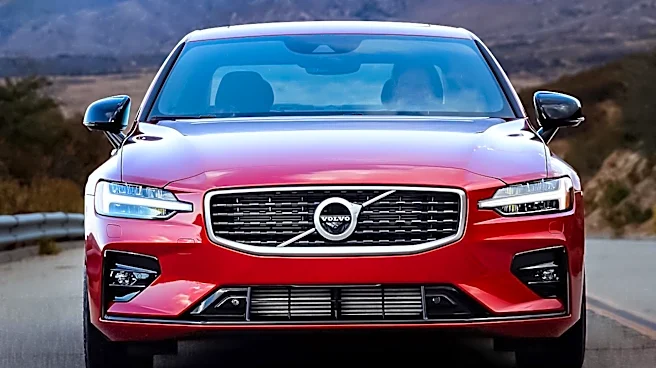
Volvo Cars has unveiled an ambitious product strategy to introduce 13 new car models by the end of 2030. This plan, described as the company's 'largest and most ambitious' product expansion, includes seven new models specifically for Western markets,
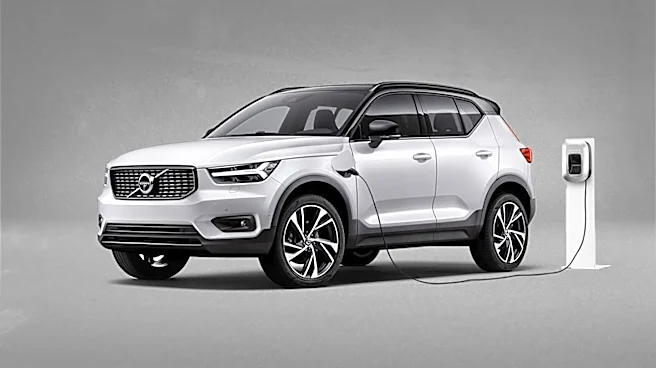
encompassing the United States and Europe, and six models for China. The Swedish automaker aims to significantly increase its market share in the battery electric vehicle (BEV) segment while also offering third-generation hybrid models to cater to customers not yet ready for fully electric vehicles. This strategy is part of a broader effort to balance global electrification goals with the diverse needs of individual markets. Volvo also plans to improve its operating margin to over 8% through more efficient production and reduced investment costs per vehicle for these upcoming models. The company has already announced updated hybrid versions of the XC60 and XC90, featuring extended electric driving ranges, which will be available in both Europe and the United States, reflecting their belief in sustained demand for hybrids into the 2030s.
Why It's Important?
This strategic move by Volvo Cars holds significant implications for the U.S. automotive market and the broader industry. By introducing seven new models tailored for Western markets, including the U.S., Volvo is intensifying competition in both the electric and hybrid vehicle segments. This expansion could lead to increased consumer choice and potentially drive innovation among competitors. The focus on third-generation hybrid models acknowledges a segment of U.S. consumers who may be hesitant to fully transition to electric vehicles, offering a bridge solution and potentially slowing the pace of full EV adoption in the short term. For U.S. consumers, this means more options for fuel-efficient and environmentally conscious vehicles. For the U.S. auto industry, it signifies a continued push towards electrification, but also highlights the ongoing relevance of hybrid technology. Volvo's goal to increase its operating margin through efficient production and lower investment costs could set new benchmarks for profitability in the evolving automotive landscape, influencing manufacturing strategies and cost structures across the industry.
What's Next?
In the coming years, Volvo Cars will focus on the development and launch of these 13 new models, with a particular emphasis on the seven designated for Western markets, including the U.S. The company plans to utilize its existing SPA2 and SPA3 architectures for these models, which are designed to be software-defined and electrified, integrating the HuginCore computing platform. This approach is expected to reduce technology and manufacturing investment compared to current levels. Volvo will also continue to invest in hybrid technology, with updated versions of the XC60 and XC90 already announced for Europe and the U.S. Investors will closely monitor Volvo's ability to successfully launch these new models and improve profitability, especially given the company's recent challenging second quarter. The market will also observe how U.S. consumers respond to the expanded range of both BEVs and advanced hybrid options, which could influence the electrification strategies of other automakers in the region.
Beyond the Headlines
Volvo's strategy to balance global electrification with regional market needs, particularly by offering both BEVs and advanced hybrids in the U.S., reflects a deeper understanding of diverse consumer preferences and infrastructure readiness. This nuanced approach challenges the 'one-size-fits-all' narrative often associated with the transition to electric vehicles. It suggests that the path to full electrification may be more gradual and varied across different regions, with hybrids playing a crucial role as an interim solution. Furthermore, Volvo's emphasis on reducing investment costs per vehicle through shared architectures and efficient production could signal a broader industry trend towards more sustainable and cost-effective manufacturing practices in the EV era. This could lead to more affordable electric and electrified vehicles in the long run, making them accessible to a wider demographic and accelerating the overall shift away from traditional internal combustion engines, albeit at a pace dictated by market demand and technological maturity.