

What's Happening?
Millennial designers are increasingly shaping fashion trends for Generation Z, with figures like Sandy Liang leading the charge. These designers, born between 1981 and 1996, are recognized for their ability to connect with younger generations through
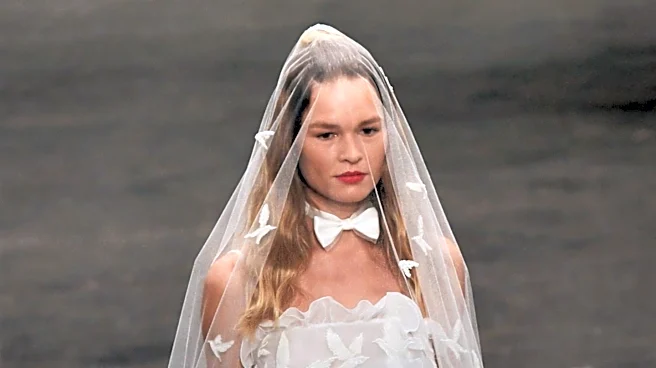
their understanding of online culture and trends, combined with traditional design knowledge. Sandy Liang, for instance, is noted for her 'girlishly whimsical designs' that evoke a sense of nostalgia while also aligning with the aesthetics of creatives such as Sofia Coppola and Petra Collins. Other millennial designers making significant impacts include Hillary Taymour of Collina Strada, known for sustainable and upcycled clothing, and the duo behind Eckhaus Latta, who bring a unique cool to everyday staples. This shift highlights a move towards more playful and personal styles in fashion, moving away from the 'quiet luxury' and minimalist basics that previously characterized millennial fashion.
Why It's Important?
The rise of millennial designers in influencing Gen Z fashion signifies a notable shift in the industry's creative leadership and market focus. This trend is important because it reflects how a generation deeply embedded in digital culture is translating its understanding of online trends and personal expression into tangible fashion. For the U.S. fashion industry, this means a potential reorientation of design philosophies, marketing strategies, and consumer engagement. Brands led by these designers are catering to Gen Z's desire for individuality and unique finds, often leveraging platforms like The RealReal, which has become a hub for pre-loved luxury and one-of-a-kind items. This emphasis on personal style over mass-produced trends could lead to increased demand for niche brands, sustainable practices, and a more diverse range of aesthetic expressions within the market. Businesses that adapt to these evolving consumer preferences, particularly Gen Z's pursuit of self-expression, stand to gain significant market share.
What's Next?
The continued influence of millennial designers on Gen Z fashion suggests a future where personal style and unique expression will remain paramount. We can anticipate further growth in brands that prioritize individuality, sustainability, and a playful approach to design. The fashion industry may see an increased focus on collaborations between established brands and these emerging designers, aiming to capture the attention of younger consumers. Additionally, platforms facilitating access to unique and pre-loved items, like The RealReal, are likely to grow in importance as Gen Z continues to seek out distinctive pieces. This trend could also lead to a greater emphasis on digital-first marketing strategies and social media engagement, as these designers and their target audience are highly connected online. The industry will likely continue to evolve to meet the demands for authenticity and creative freedom that these designers and their Gen Z followers champion.
Beyond the Headlines
Beyond the immediate trends, the ascendancy of millennial designers like Sandy Liang points to a deeper cultural shift in how generations perceive and interact with fashion. This movement challenges traditional notions of luxury and mass appeal, favoring instead a more personalized and often nostalgic approach. The emphasis on 'girlishly whimsical designs' and 'childhood bedroom' aesthetics suggests a desire for comfort, authenticity, and a rejection of overly serious or aspirational fashion. This could have long-term implications for consumer psychology, fostering a market that values emotional connection and individual narrative over brand prestige alone. Furthermore, the success of designers who 'can withstand (or even encourage) controversy' indicates a growing tolerance for unconventionality and a desire for fashion that sparks conversation, reflecting broader societal shifts towards greater openness and self-acceptance. This evolution could redefine what constitutes 'fashion-forward' in the coming years.