



What's Happening?
Bill Haney, father and trainer of WBO welterweight champion Devin Haney, has publicly disclosed a five-man 'hit list' of potential opponents for his son's next fight. Devin Haney, a three-division world champion, has not fought since November when he defeated
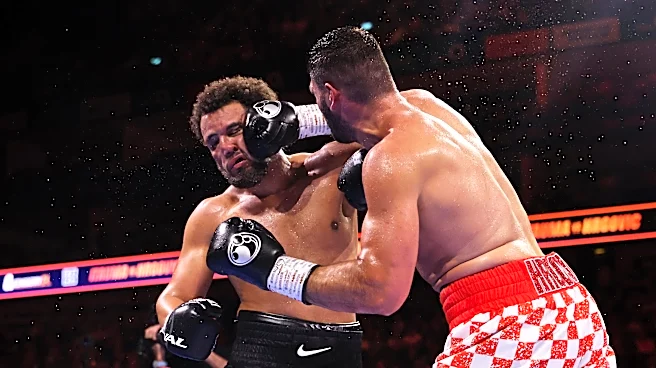
Brian Norman Jr. to claim the WBO welterweight title. Following this victory, a unification bout with then-WBA champion Rolando Romero fell through due to negotiation issues. Haney was subsequently ordered to defend his WBO strap against mandatory challenger Keyshawn Davis. However, Davis withdrew from the contest after rejecting a $3 million offer from his promoter, Top Rank, and facing an unfavorable 75/25 purse split, which would have left him with approximately $2 million. Despite Davis's withdrawal, Bill Haney confirmed to Ring Magazine that Davis remains on the list. The top contender on the list is pound-for-pound star Shakur Stevenson. Other potential opponents include Delante 'Tiger' Johnson, IBF champion Liam Paro, and top contender Jack Catterall. Delante Johnson was notably involved in an altercation with Team Haney during a weigh-in for a previous fight.
Why It's Important?
This announcement by Bill Haney is significant for the boxing world, particularly in the welterweight division, as it outlines the strategic direction for one of the sport's top fighters. Devin Haney's next opponent will have major implications for the championship landscape and could lead to highly anticipated unification bouts. The inclusion of Shakur Stevenson, a prominent pound-for-pound fighter, suggests a potential blockbuster event that would draw considerable attention and revenue. The ongoing challenges in securing fights, as seen with the collapsed Rolando Romero unification and Keyshawn Davis's withdrawal due to financial disagreements, highlight the complex business aspects of professional boxing, including purse splits and promotional negotiations. For fans, this 'hit list' provides clarity on the potential matchups and builds anticipation for Haney's return to the ring. The selection of an opponent from this list will not only shape Haney's legacy but also influence the careers of the listed fighters, offering them opportunities for significant titles and paydays.
What's Next?
Devin Haney is expected to return to action later this year, though a specific date or location for his next fight has not yet been announced. The focus will now be on which of the five potential opponents on Bill Haney's 'hit list' will be secured. Negotiations will likely commence with the teams of Shakur Stevenson, Keyshawn Davis, Delante Johnson, Liam Paro, and Jack Catterall. The financial terms, particularly the purse split, will be a critical factor, as demonstrated by Keyshawn Davis's previous withdrawal. Should a fight with Shakur Stevenson materialize, it would be a major event, potentially leading to further discussions about pound-for-pound rankings and divisional supremacy. The boxing community will be closely watching for official announcements regarding Haney's next opponent and the progression of these potential matchups, which could significantly impact the welterweight division's future.
Beyond the Headlines
The public revelation of a 'hit list' by Bill Haney goes beyond simple fight promotion; it's a strategic move to control the narrative and apply pressure on potential opponents and their promoters. By naming specific fighters, Team Haney is signaling their intentions and potentially influencing public opinion and future negotiations. This approach can create buzz and demand for certain matchups, making it harder for other teams to avoid fights. The financial disputes, such as the one with Keyshawn Davis, underscore a broader issue in boxing where mandatory challengers may forgo title shots if the financial terms are not deemed equitable. This highlights the tension between sporting achievement and economic viability for fighters. Furthermore, the inclusion of Delante Johnson, who has had a physical altercation with Team Haney, adds a personal rivalry element, which often fuels fan interest and can lead to more dramatic build-ups for fights, transcending the purely athletic competition into a more theatrical spectacle.