






What's Happening?
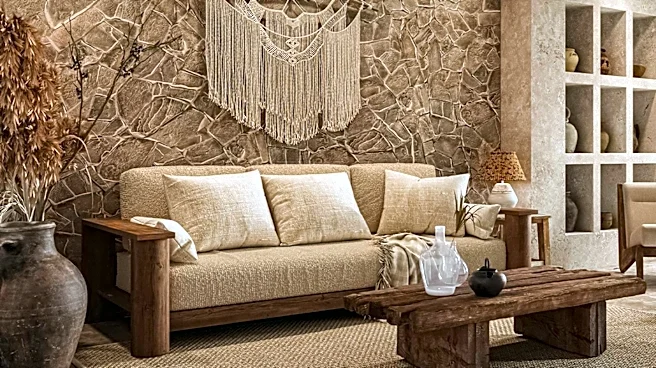
The rustic aesthetic in interior design is characterized by its emphasis on natural variation and character, utilizing warm tones and materials such as wood, stone, and aged finishes. This design approach celebrates imperfections and the natural appearance
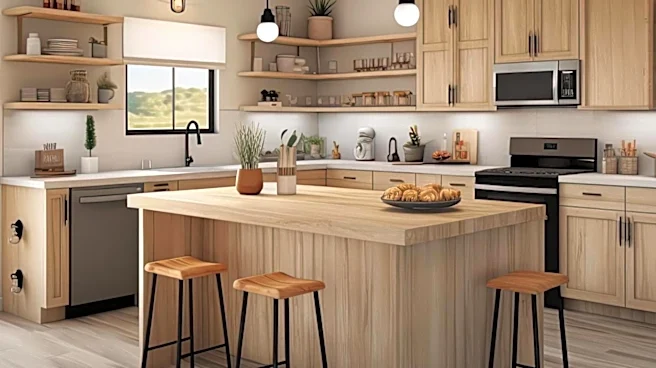
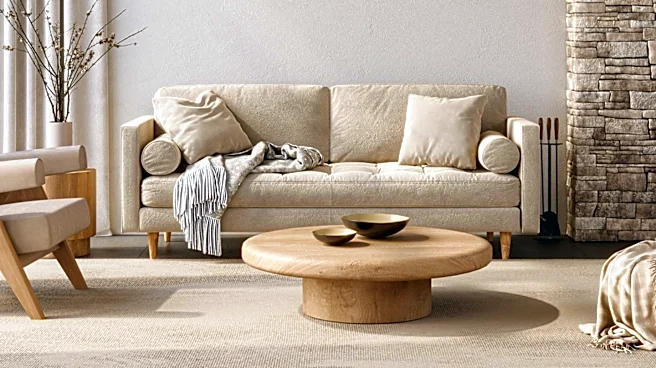
of materials, providing warmth and character without a polished look. Examples include flooring with visible knots and saw marks, rustic wood fences, and mid-century modern dining rooms that incorporate natural elements. This style is gaining traction for its ability to create a collected, lived-in feel, moving away from overly distressed or uniform appearances. It often involves a balanced design with warm brown, honey, taupe, or soft gray tones, along with textures like wire-brushed surfaces and varied plank colors, which serve as a natural foundation for furniture and cabinetry.
Why It's Important?
The growing popularity of the rustic aesthetic reflects a broader shift in consumer preferences towards authenticity and natural elements in home environments. This trend impacts the U.S. interior design and home furnishing industries, driving demand for specific materials and finishes. Manufacturers and retailers are adapting by offering products that align with this style, such as rustic hardwood, luxury vinyl plank with wood-look surfaces, and ceramic tiles mimicking aged wood or natural stone. For homeowners, embracing this aesthetic can enhance comfort and create a unique, personalized living space. The emphasis on durability and natural character also suggests a move towards more sustainable and long-lasting design choices, potentially influencing material sourcing and production practices across the industry. This focus on natural variation over uniformity also allows for greater flexibility in design, as imperfections are celebrated rather than concealed.
What's Next?
The rustic aesthetic is expected to continue evolving, with designers and homeowners exploring new ways to integrate natural character into modern living spaces. This could lead to further innovations in material science, such as more realistic wood-look alternatives that offer enhanced durability and moisture resistance. The trend may also influence architectural design, with a greater emphasis on incorporating natural light and raw materials into new constructions. Furthermore, the demand for vintage and handcrafted items that complement the rustic style is likely to increase, fostering growth in local artisan markets and antique businesses. As consumers seek to create unique and personal environments, the rustic aesthetic will likely blend with other styles, such as mid-century modern or eclectic, to form hybrid designs that offer both warmth and contemporary appeal.
Beyond the Headlines
Beyond its immediate impact on design choices, the rustic aesthetic taps into a deeper cultural appreciation for nature, craftsmanship, and a sense of history. In an increasingly digital and fast-paced world, there's a psychological comfort derived from environments that feel grounded, authentic, and connected to natural origins. This design philosophy encourages a mindful approach to consumption, valuing pieces with character and longevity over mass-produced, disposable items. It also subtly promotes a connection to the past, as aged finishes and natural materials evoke a sense of heritage and timelessness. The celebration of imperfections in rustic design can also be seen as a metaphor for embracing authenticity in life, moving away from the pursuit of flawless, artificial appearances towards a more genuine and lived-in existence. This cultural shift could have long-term implications for how Americans perceive beauty, value, and comfort in their homes and beyond.