






What's Happening?
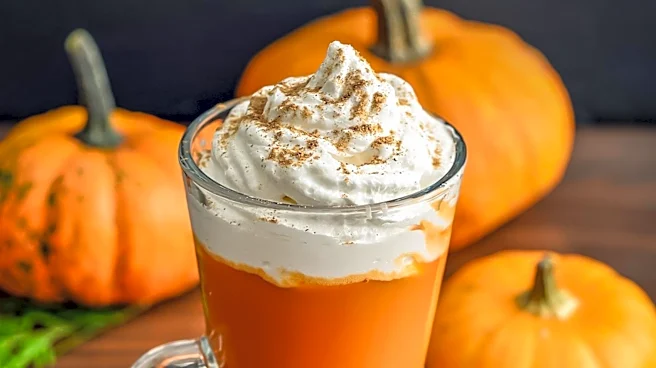
Starbucks has once again re-released its line of fall-themed drinks and snacks, prominently featuring the Pumpkin Spice Latte (PSL). This seasonal offering is immensely popular, with millions of consumers eagerly anticipating its return each autumn. The
PSL has become a cultural phenomenon, embodying the 'pumpkin spice season' and evoking a strong sense of nostalgia for many. While the drink garners widespread enthusiasm, it also sparks a significant amount of online discussion, including memes and varied opinions, with some expressing annoyance at the pervasive trend. Despite differing views, the annual return of pumpkin spice products consistently generates considerable social media engagement and consumer excitement.
Why It's Important?
The annual return of Starbucks' Pumpkin Spice Latte is a significant event in the U.S. consumer market, demonstrating the powerful impact of seasonal marketing and nostalgic branding. For businesses, it highlights how a single product can create a cultural moment, driving sales and brand engagement through anticipation and tradition. The PSL's success underscores the value of emotional connections in consumer purchasing decisions, as its 'nostalgic taste' is a key draw. This phenomenon also showcases the dual nature of viral trends: while generating immense popularity, they can also provoke backlash, yet both contribute to heightened visibility and discussion. Understanding this dynamic is crucial for brands aiming to create impactful seasonal campaigns and leverage social media for broad reach.
Beyond the Headlines
The Pumpkin Spice Latte's enduring popularity extends beyond a simple beverage choice; it has become a symbol of autumn and a cultural touchstone in the U.S. This annual ritual reflects a collective desire for comfort, predictability, and the celebration of seasonal transitions. The intense social media activity surrounding the PSL, both positive and negative, illustrates how consumer products can become central to online discourse and identity. It also reveals how brands can inadvertently (or intentionally) create a 'love-it-or-hate-it' product that, regardless of individual preference, remains highly relevant and talked about. This phenomenon offers insights into the psychology of consumer behavior, where shared experiences and cultural narratives play a significant role in shaping market trends and brand loyalty.