







What's Happening?
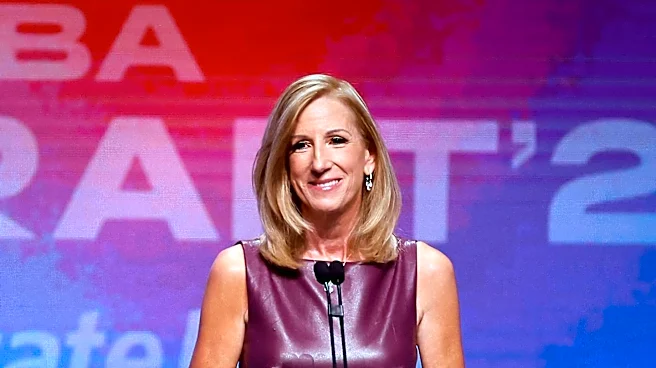
WNBA Commissioner Cathy Engelbert is set to retire at the end of 2026, concluding a seven-year period marked by significant growth and challenges for the league. Engelbert, who turns 62 in November, informed the Associated Press that she had been considering
retirement for several months, having initially intended to serve for 3.5 years. Her tenure saw the WNBA expand from 12 to 18 teams by 2030, achieve record television ratings, and secure a new long-term media rights deal. Under her leadership, the average value of a WNBA franchise increased dramatically from $10 million in 2019 to approximately $460 million in 2026. She also oversaw the implementation of the first million-dollar player salaries, the creation of the 'Wubble' during the COVID-19 pandemic, and the introduction of an airline charter program for player travel. NBA Commissioner Adam Silver praised Engelbert for presiding over the most significant growth period in the league's 30-year history. Despite these achievements, her time as commissioner also faced turmoil, including increased social media vitriol directed at players and discussions surrounding transgender athletes in the league.
Why It's Important?
Engelbert's retirement marks a pivotal moment for the WNBA, as her leadership has been instrumental in transforming the league's financial and operational landscape. The exponential growth in franchise value and the securing of a new media rights deal highlight a strengthened economic foundation for women's professional basketball in the U.S. The introduction of charter travel for players and increased salaries directly impacts player welfare and professionalization, potentially attracting more talent to the league. However, the challenges faced during her tenure, such as player safety concerns regarding online harassment and the ongoing debate about transgender athletes, underscore critical social and ethical issues that the league's next leader will need to address. The WNBA's continued expansion and increased visibility also mean that its policies and public image will have a broader impact on discussions about women's sports and gender equality in the U.S.
What's Next?
A succession process will be initiated to find Engelbert's replacement, with both internal and external candidates being considered. Engelbert expressed her willingness to assist in the transition to ensure a smooth handover, emphasizing the importance of the league's continued elevation. The new commissioner will inherit a league with significant momentum but also pressing issues, including maintaining financial growth, addressing player concerns about online safety, and navigating complex social discussions. The ongoing expansion to 18 teams by the end of the decade will require strategic planning and execution. The league's long-term media rights deal and collective bargaining agreement will continue to shape its financial stability and player relations. The next leader will be tasked with building upon Engelbert's legacy while also charting a course through the evolving landscape of professional sports and societal expectations.
Beyond the Headlines
Engelbert's departure highlights the increasing complexity of leading a major sports league in the modern era, where business growth is intertwined with social responsibility and public discourse. The WNBA's experience with increased social media vitriol directed at players reflects a broader societal challenge of online harassment, particularly affecting public figures. The league's stance and actions on such issues, as well as on the inclusion of transgender athletes, will continue to set precedents and influence other sports organizations. The significant increase in WNBA franchise values could also attract new investors and further professionalize women's sports, potentially leading to greater equity in compensation and resources compared to men's leagues. The emphasis on a thoughtful succession plan underscores the importance of leadership continuity in sustaining the league's progress and addressing its evolving challenges, both on and off the court.