




What's Happening?
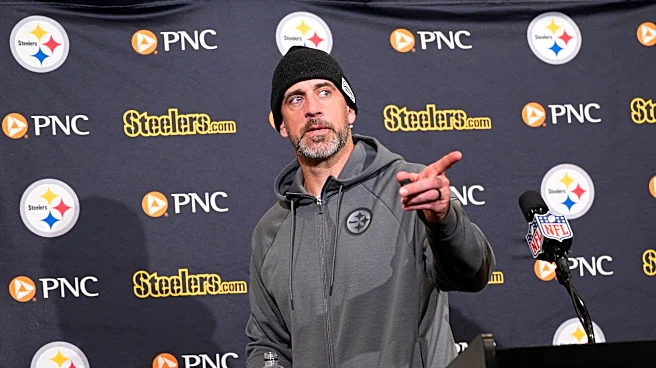
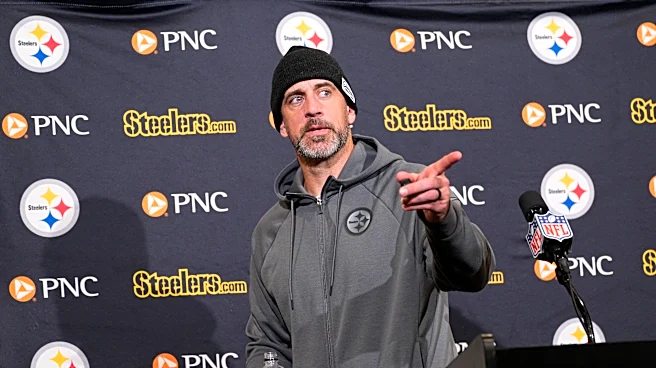
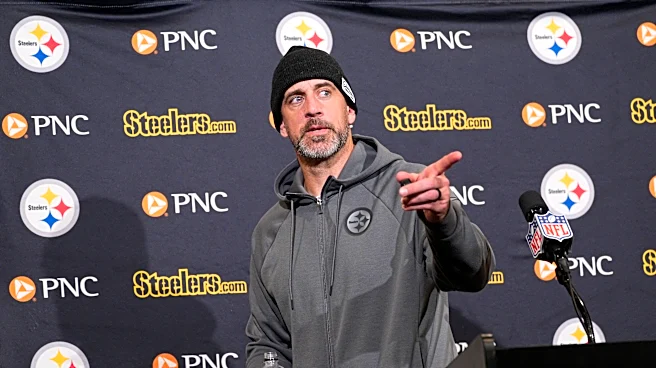
Aaron Rodgers, the 42-year-old quarterback for the Pittsburgh Steelers, was released by the team on Wednesday, November 25, 2026, following his public criticism of head coach Mike McCarthy. The release came hours after Rodgers' appearance on 'The Pat
McAfee Show,' where he accused McCarthy of missing meetings, falling behind on film study, and even falling asleep during a quarterbacks meeting. Rodgers also claimed McCarthy mistakenly used his former team's nickname, 'Packers,' during a halftime huddle. These allegations were corroborated by multiple NFL sources, according to ESPN. The Steelers had benched Rodgers for an upcoming game against the Denver Broncos, leading to his absence from practice.
Why It's Important?
This event highlights significant internal discord within a major NFL team, impacting team dynamics and performance. The public nature of Rodgers' criticisms and the swift decision to release him underscore the high stakes and intense pressure in professional sports. For the Steelers, the departure of a four-time NFL MVP, despite recent struggles, marks a pivotal moment that could redefine their season and future strategy. It also raises questions about leadership and communication within the organization. The controversy could affect fan morale and the team's public image, especially as they hold a wild-card spot despite a two-game losing streak.
What's Next?
Following Rodgers' release, Mason Rudolph is set to start as quarterback for the Steelers in their upcoming game against the Denver Broncos. Despite the controversy and corroborated allegations against him, Coach Mike McCarthy retains the support of Pittsburgh's ownership and front office, according to NFL Network and ESPN. The Steelers (6-4) will continue their season, aiming to maintain their playoff position. Rodgers, now a free agent, will likely seek opportunities with another NFL team, while the Steelers will need to address the void left by his departure and focus on team cohesion under McCarthy's continued leadership.
Beyond the Headlines
The incident delves into the complex relationship between star athletes and coaching staff in professional sports. Rodgers' public airing of grievances, while leading to his immediate release, also brought to light internal issues that multiple sources confirmed. This raises questions about accountability for coaches, even those with a history of success like McCarthy. The situation also reflects the growing influence of player voices, particularly through media platforms, and how such public statements can rapidly alter career trajectories and team compositions. The long-term implications for both Rodgers' career and McCarthy's tenure with the Steelers will be closely watched, potentially setting precedents for how similar conflicts are handled in the future.