







What's Happening?
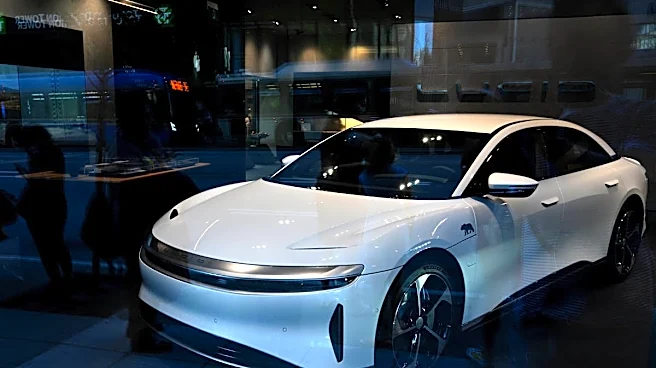
Lucid Motors, an electric vehicle manufacturer, has announced a significant reduction in its workforce, cutting 18% of its staff. This decision comes shortly after Silvio Napoli took over as the new CEO. The company has been struggling financially, reporting
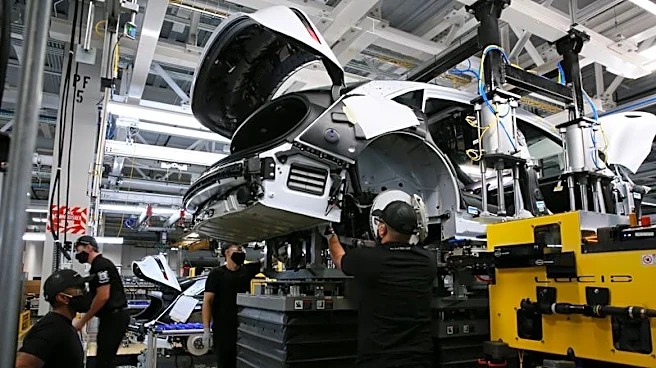
a net loss of $1.13 billion in the first quarter of 2026, with revenues of only $282.5 million. The layoffs are part of a broader cost-cutting strategy aimed at saving approximately $158 million annually. The company has also discontinued the second shift at its AMP-1 plant in Casa Grande, Arizona, to adjust production levels and reduce inventory. The previous interim CEO, Marc Winterhoff, who had also implemented a 12% workforce reduction in February, is leaving the company.
Why It's Important?
The layoffs at Lucid Motors highlight the challenges faced by electric vehicle manufacturers in achieving profitability amidst high operational costs and competitive market pressures. The company's financial struggles and subsequent workforce reductions could impact its ability to innovate and compete in the rapidly evolving EV market. This development also reflects broader industry trends where companies are forced to streamline operations to remain viable. The reduction in workforce and production adjustments may affect local economies, particularly in areas where Lucid's operations are significant. Additionally, the company's future success will depend on its ability to execute its mid-range model offensive and planned robotaxi service.
What's Next?
Lucid Motors plans to focus on its existing premium models and the development of new mid-range vehicles, including two SUVs and a robotaxi service. The company aims to deploy 35,000 vehicles in collaboration with Nuro and Uber. The success of these initiatives will be crucial for Lucid's financial recovery and market positioning. Stakeholders will be closely monitoring the company's ability to achieve its cost-saving targets and improve profitability. The departure of key executives and the elimination of the COO position may also lead to further organizational changes as the company seeks to stabilize its operations.