







What's Happening?
Dario Amodei, CEO of Anthropic, has voiced concerns regarding the accelerated pace of artificial intelligence (AI) development and its potential risks. He advocates for voluntary slowdowns in AI progress until robust safety measures are firmly established.
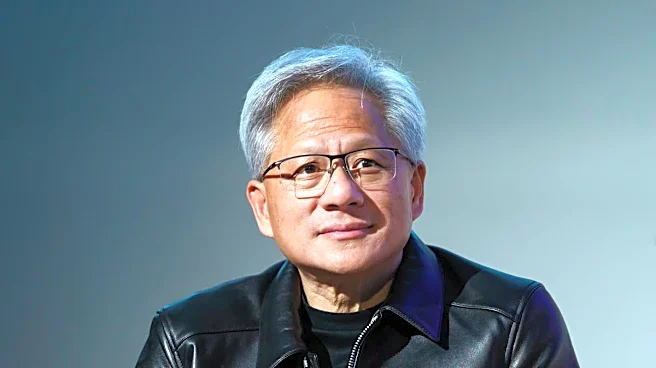
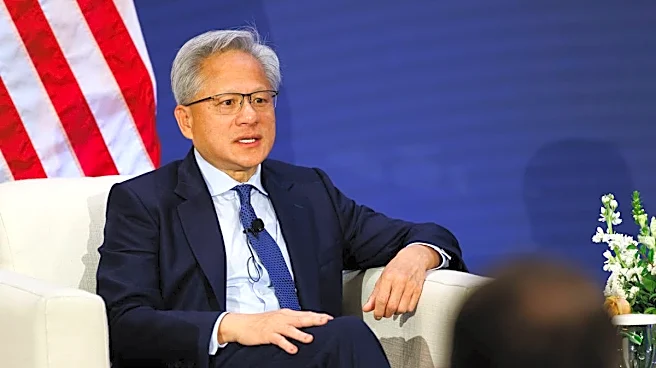
Amodei's perspective contrasts with some other figures in the AI industry, such as Nvidia CEO Jensen Huang, who recently suggested that human-level AI (AGI) has already arrived. Amodei, however, maintains a higher threshold for what constitutes AGI, stating that if a 'country of geniuses' existed in a data center, it would be evident, which he believes is not currently the case. His company, Anthropic, is actively involved in the AI sector, and his statements reflect a cautious approach to the technology's advancement.
Why It's Important?
Dario Amodei's concerns are significant because they come from a leader within a prominent AI development company, Anthropic. His call for a voluntary slowdown in AI development underscores a growing debate within the tech industry and among policymakers about the ethical implications and potential societal impacts of rapidly advancing AI. This perspective highlights the tension between innovation and caution, suggesting that unchecked progress could lead to unforeseen risks. For the U.S. technology sector, this debate could influence future regulatory discussions, research priorities, and investment strategies. It also brings to the forefront the responsibility of AI developers to consider the broader consequences of their creations, potentially shaping public perception and trust in AI technologies. The differing views among industry leaders like Amodei and Huang illustrate the complexity of defining and managing AI's trajectory.
What's Next?
The ongoing debate initiated by figures like Dario Amodei is likely to intensify, influencing discussions among AI developers, policymakers, and the public. It could lead to increased calls for industry-wide standards, ethical guidelines, and potentially government regulation to ensure AI safety. Companies like Anthropic might continue to prioritize safety research and responsible development practices, potentially setting a precedent for others in the field. This discourse could also impact investment in AI, with a greater emphasis placed on projects that demonstrate a commitment to safety and ethical considerations. Furthermore, the differing opinions on the current state of AI, particularly regarding the achievement of AGI, will continue to shape public expectations and the direction of future AI research and applications.
Beyond the Headlines
Dario Amodei's stance on AI development delves into profound ethical and philosophical questions about humanity's relationship with advanced technology. His advocacy for a slowdown until safety measures are in place reflects a precautionary principle, suggesting that the potential for harm outweighs the benefits of rapid, unregulated progress. This perspective touches upon the long-term societal implications of AI, including its potential impact on employment, privacy, and even human autonomy. It also raises questions about who should govern AI development and how to balance innovation with societal well-being. The debate over AI safety and the definition of AGI is not merely technical; it is a fundamental discussion about the future of human civilization and the values that will guide our technological evolution, potentially leading to new frameworks for technological governance and international cooperation.