










What's Happening?
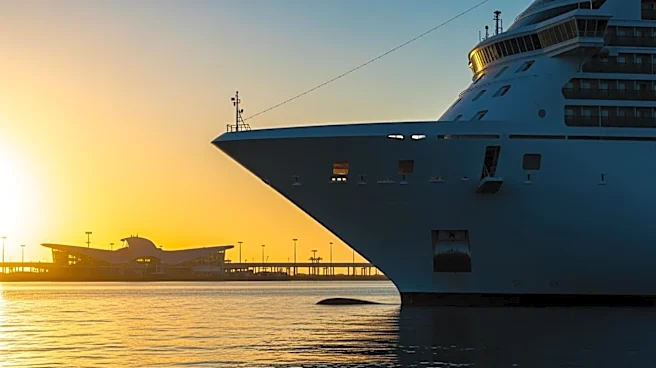
The Port of Galveston in Texas is experiencing significant growth as a cruise homeport, driven by its strategic geographic location and increasing population in the Central United States. The port has doubled its passenger movements from 1.9 million in 2017
to a forecasted 3.9 million by 2026. This growth is supported by a 20-Year Strategic Master Plan adopted in 2019, which guides the port's development. The port has invested $334 million in the cruise industry, including the addition of new cruise terminals and facilities. Major cruise lines such as Carnival, MSC Cruises, and Royal Caribbean have established year-round operations, while others like Disney Cruise Line and Norwegian Cruise Line have seasonal deployments. The port's unique position allows easy access to the ocean and proximity to Houston's airports, enhancing its appeal to cruise passengers.
Why It's Important?
The expansion of the Port of Galveston as a cruise homeport is significant for the local economy and the broader cruise industry. The port's growth supports job creation and economic development in the region, attracting tourists and boosting local businesses such as hotels and restaurants. The strategic investments in infrastructure and facilities enhance the port's capacity to accommodate larger ships and more passengers, positioning Galveston as a key player in the cruise industry. This growth also reflects broader trends in the cruise market, with increasing demand for cruise travel and the need for ports that can support larger vessels and more frequent sailings.
What's Next?
Looking ahead, the Port of Galveston plans to continue its expansion, with potential developments including a new berth on Pelican Island and additional cruise terminals. The port is also working on initiatives to support LNG-fueled ships and shore power services, aligning with industry trends towards sustainability and environmental responsibility. The port's master plan forecasts a potential doubling of passenger movements to between 7 and 8 million by 2036, with further growth expected by 2045. These developments will require continued collaboration with cruise lines, energy companies, and other stakeholders to ensure the port's infrastructure and services meet future demands.