






What's Happening?
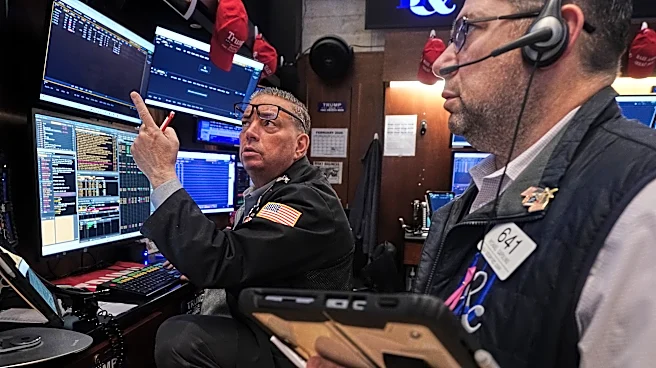
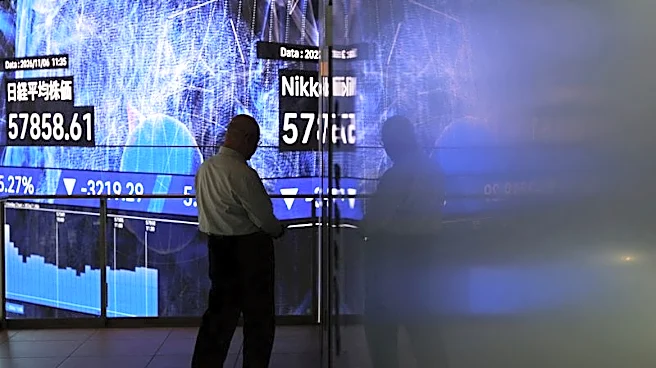
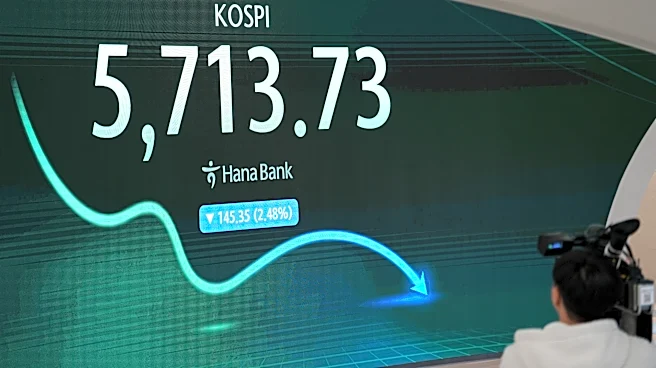
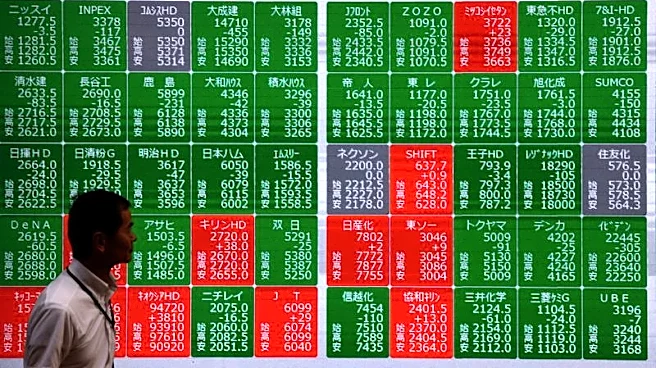
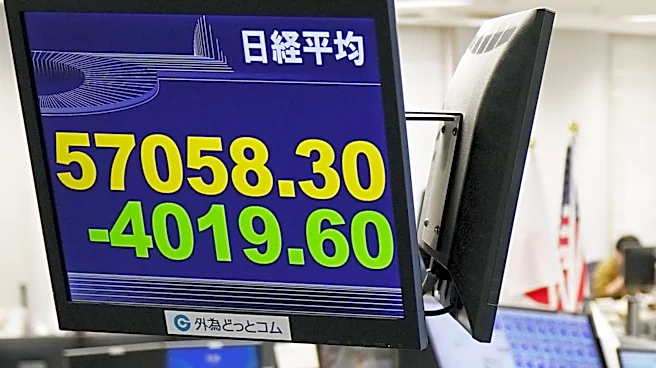
Chinese and Hong Kong stock markets experienced declines on Friday, influenced by a Nasdaq-led tech rout that spread across Asia. This selloff fueled concerns that the artificial intelligence (AI) boom might be losing momentum. China's blue-chip CSI300
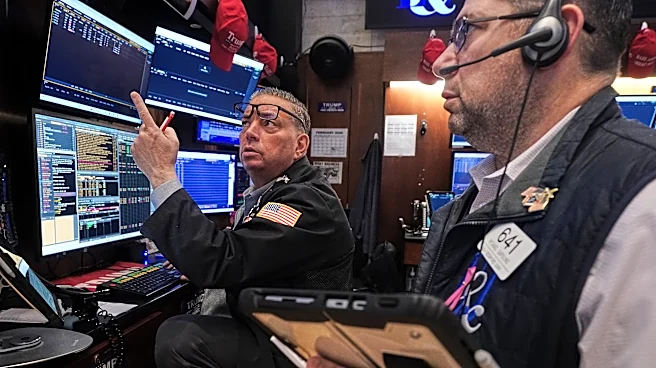
Index dropped 1.5% by midday, while the Shanghai Composite Index fell 1.1%. In Hong Kong, the benchmark Hang Seng Index was down 1%, and the Hang Seng Artificial Intelligence Index tumbled 4%. The tech-focused Star 50 Index and the AI Index in mainland China initially slumped by as much as 5% before recovering some losses. This downturn follows a significant overnight drop in the Nasdaq, which saw its steepest one-day decline since April 2025, as investors worried that a Democratic sweep in the U.S. midterm elections could lead to increased scrutiny of the AI sector.
Why It's Important?
The global tech selloff, particularly impacting the AI sector, has significant implications for Chinese markets due to their heavy reliance on technology stocks and the influence of U.S. market performance. The decline in Chinese AI hardware stocks, such as Zhongji Innolight and Eoptolink Technology, which generate substantial revenue in the U.S., highlights the interconnectedness of global tech markets. While China is pushing for technological self-reliance, the sentiment-driven nature of its stock market means that U.S. AI stock performance heavily sways investor confidence. The concern that the AI-driven rally's 'backbone has snapped' in the U.S. raises questions about the sustainability of AI bull markets elsewhere, including China. This situation underscores the vulnerability of even 'good companies' to broad market risk aversion.
What's Next?
Despite the sharp retreat, mainland Chinese markets saw some bargain hunting, which helped trim losses and kept them on track for weekly gains, partly due to Beijing's market-supporting measures. However, strategists like Pepperstone's Dilin Wu suggest that China cannot entirely escape the fallout from Wall Street's aggressive selling. The growth of AI chip players like Huawei and Cambricon, driven by China's push for technological self-reliance, may offer some resilience, but the broader market sentiment remains heavily influenced by U.S. tech trends. Investors will continue to closely monitor whether the AI rally in the United States is a bubble, as any signs of it bursting will undoubtedly affect the Chinese market. The ongoing regulatory environment and geopolitical tensions will also play a crucial role in shaping the future trajectory of China's tech sector.
Beyond the Headlines
The current market volatility in China's tech sector, particularly in AI, reveals a complex interplay between global market forces, domestic policy objectives, and investor psychology. China's ambition for technological self-reliance, while a long-term strategic goal, does not fully insulate its markets from international sentiment, especially concerning high-growth sectors like AI. The 'risk-off' mood spilling over from the U.S. highlights the deep integration of global financial markets and the ripple effect of major economic or political shifts in one region on others. This situation could prompt Chinese policymakers to further accelerate domestic innovation and market stabilization measures, potentially leading to a more insulated, yet still globally aware, tech ecosystem. The ethical and regulatory scrutiny of AI, initially a U.S. concern, could also become a global trend, influencing investment and development strategies worldwide.