
What's Happening?
Oil prices have surged by 2% to reach a five-week high due to escalating tensions between the U.S. and Iran, coupled with threats from Yemen's Houthi rebels to blockade Saudi Arabia. The price of Brent
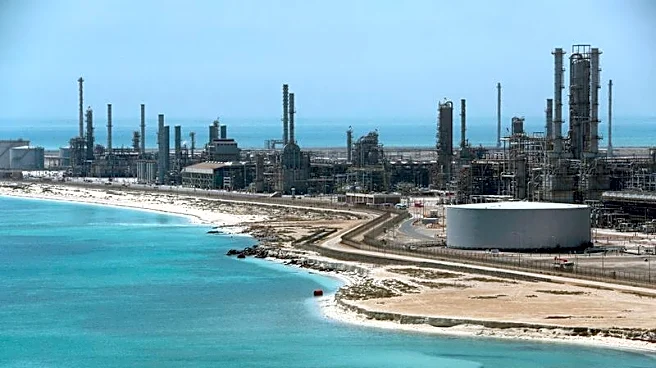
crude rose to $91.01 per barrel, while U.S. West Texas Intermediate crude reached $84.91. The market is reacting to potential disruptions in energy supply, particularly in the Middle East, as U.S. forces have conducted strikes in Iran, and the Houthis have threatened Saudi oil exports. This situation has led to a reversal of oil tankers carrying Saudi crude to Asia.
Why It's Important?
The increase in oil prices highlights the vulnerability of global energy markets to geopolitical tensions. Disruptions in the Middle East, a key region for oil production, can lead to significant volatility in oil prices, affecting global economies. Higher oil prices can result in increased costs for transportation and manufacturing, potentially leading to inflationary pressures. The situation also underscores the strategic importance of the Middle East in global energy supply and the potential for conflict to impact international trade routes.
What's Next?
The oil market will closely monitor developments in the U.S.-Iran conflict and the actions of the Houthi rebels. Any further escalation could lead to additional price increases and supply disruptions. The situation may prompt discussions among global leaders on energy security and the need for diversified energy sources. Additionally, the market will await reports on U.S. crude storage levels, which could provide further insights into supply and demand dynamics.