






What's Happening?
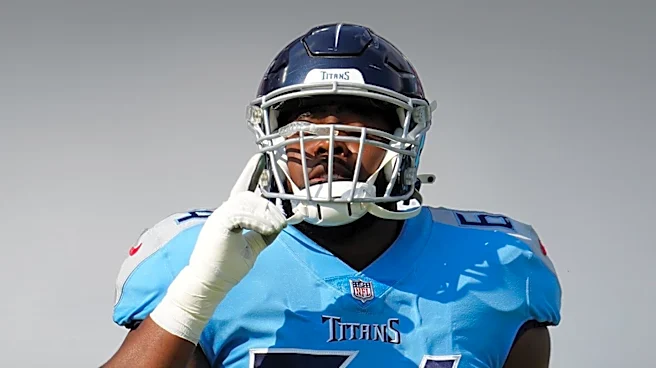
Michael Strahan, a Hall of Fame defensive end and TV personality, faced criticism for his interview with former NFL running back Chris Johnson, who revealed his ALS diagnosis. Critics argued that Strahan failed to address the potential link between ALS and football.
In response, Strahan explained on The Dan Patrick Show that his role was to facilitate Johnson's story, not to pursue a personal agenda or create controversy. He emphasized that the interview was about Johnson's experience and not about making headlines. Strahan also noted that he did discuss football's support for Johnson and his family, but chose not to focus on the disease's connection to the sport.
Why It's Important?
The criticism highlights ongoing debates about the responsibilities of interviewers, especially when dealing with sensitive topics like health and sports. Strahan's approach raises questions about journalistic integrity and the balance between storytelling and accountability. The discussion also underscores the broader issue of ALS and its potential links to football, a topic of significant concern given the NFL's history with concussion-related health problems. The way media handles such stories can influence public perception and awareness of these critical issues, impacting how they are addressed by sports organizations and health advocates.
Beyond the Headlines
The situation reflects broader ethical considerations in journalism, particularly in sports media. Interviewers must navigate the fine line between respecting a subject's narrative and fulfilling their duty to ask challenging questions. This case also brings attention to the NFL's role in addressing health risks associated with the sport. As public awareness of ALS and its potential connections to football grows, there may be increased pressure on the NFL to enhance player safety measures and support for affected individuals. The media's role in shaping these discussions is crucial, as it can drive policy changes and public advocacy.