


What's Happening?
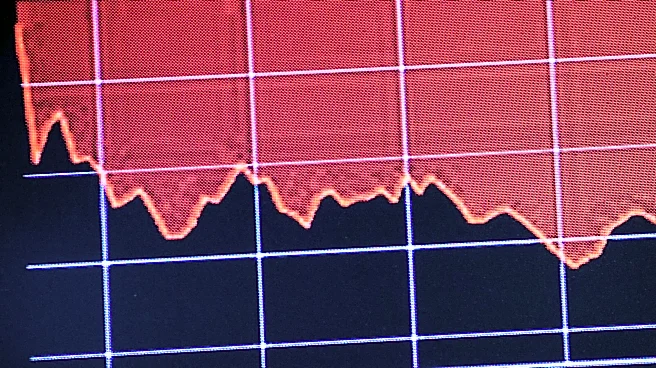
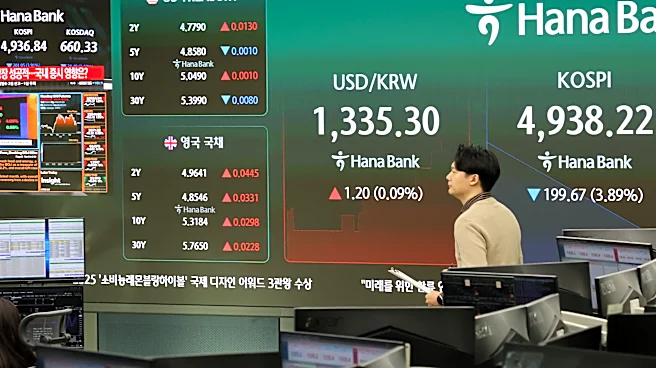
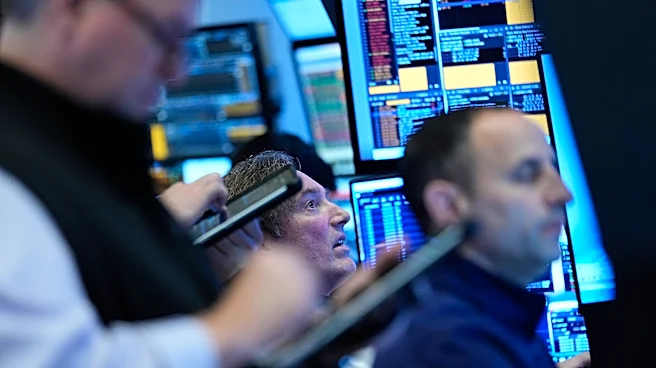
The AI trade, a significant driver of the four-year bull market and a contributor to the U.S. economy, is currently experiencing instability. This downturn follows concerns among investors regarding the sustainability of spending, elevated borrowing costs,
returns on investment, and political opposition to data center construction. A major destabilizing factor was the abrupt resignation of Jensen Huang from Nvidia on November 12. This event has led to new investigations into Nvidia's business, particularly in Asia, and has created uncertainty regarding the company's future leadership. Despite Nvidia reporting strong third-quarter results and raising its revenue growth forecast, the AI group has not found a bottom. The recent IPO of Anthropic, initially seen as a potential clearing event, has also failed to stabilize the wobbly AI trade, with selling broadening across market sectors.
Why It's Important?
The current instability in the AI trade is critical because of its broad impact on the U.S. economy and financial markets. As a primary growth engine, a sustained downturn in AI could dampen overall market sentiment and economic expansion. The uncertainty surrounding Nvidia, a leading chipmaker and a major capital source for the AI ecosystem, creates ripple effects across the entire technology sector. Investors are closely watching whether the AI trade can regain its footing, as its performance influences venture capital flows, corporate investment in R&D, and job creation in high-tech fields. The situation also highlights investor sensitivity to leadership changes and geopolitical risks, particularly concerning business operations in Asia, which can affect global supply chains and market confidence.
What's Next?
Investors will be closely monitoring key indicators this week to assess the future direction of the AI trade. The earnings reports of server makers Hewlett Packard Enterprise (HPE) and Dell Technologies are anticipated to serve as barometers for the broader AI group. Both companies are significant partners with Nvidia, and their performance and outlook will provide insights into the demand for AI infrastructure. The market's reaction to these reports will be crucial in determining if dip buyers emerge to support the AI sector. Additionally, any further developments regarding Nvidia's leadership or ongoing investigations will continue to influence investor sentiment. The broader economic environment, including interest rate policies and consumer spending trends, will also play a role in the AI trade's recovery.
Beyond the Headlines
The current turbulence in the AI trade extends beyond immediate market fluctuations, touching upon deeper structural and ethical considerations. The political opposition to data center construction, for instance, signals growing societal concerns about the environmental impact and resource consumption of AI infrastructure, potentially leading to stricter regulations and increased scrutiny. The investigations into Nvidia's business in Asia could foreshadow a broader trend of geopolitical tensions impacting global technology supply chains and market access, forcing companies to re-evaluate their international strategies. Furthermore, the market's reaction to leadership changes in key AI companies underscores the outsized influence of individual figures in shaping investor confidence in nascent, high-growth sectors. This period of instability may ultimately force the AI industry to mature, focusing more on sustainable growth models, ethical AI development, and resilient supply chains.