




What's Happening?
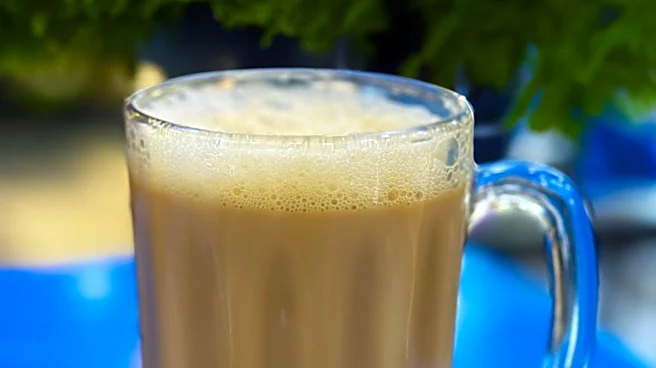
Hong Kong-style milk tea, a distinctive beverage made from strong black tea boiled and strained multiple times, then mixed with evaporated milk, has been recognized for its unique making technique. Since 2017, this technique has been included on the Representative
List of the Intangible Cultural Heritage of Hong Kong. The process involves blending various black tea leaves, boiling them, repeatedly pulling the tea through a fine cotton strainer (often called a 'silk stocking' due to its appearance), reheating, and finally adding evaporated milk. This method results in a dark, thick, and creamy tea with a strong flavor that stands up to the richness of the milk. KamCha competitions for milk tea makers have been held since 2009, fostering skill and attracting new talent to the craft.
Why It's Important?
Hong Kong-style milk tea is more than just a beverage; it's a significant cultural icon and a staple in Hong Kong's culinary landscape, particularly in 'cha chaan teng' (Hong Kong-style cafes). Its heritage listing underscores the importance of preserving traditional craftsmanship and culinary practices. For the U.S., particularly in cities with large Cantonese communities like New York, this recognition highlights the cultural richness that immigrant communities bring. Restaurants like Dim Sum Palace, which offer Hong Kong milk tea, contribute to cultural exchange and provide a taste of Hong Kong's unique identity. The drink's popularity reflects a blend of British tea culture with local adaptations, showcasing how global influences can create distinct local traditions. Its strong, creamy profile also offers a unique alternative to other popular tea and coffee drinks, appealing to a diverse palate.
What's Next?
The continued recognition and promotion of Hong Kong-style milk tea through heritage listings and competitions suggest a sustained effort to preserve and popularize this cultural staple. Restaurants in the U.S. and globally that serve this tea are likely to continue to highlight its unique preparation and cultural significance. As awareness grows, there may be increased demand for authentic Hong Kong-style milk tea, potentially leading to more establishments offering it. The ongoing KamCha competitions will continue to encourage innovation and excellence among tea masters, ensuring the tradition evolves while maintaining its core characteristics. This cultural preservation effort also serves as a reminder of the broader intangible cultural heritage that exists within various communities worldwide.
Beyond the Headlines
The story of Hong Kong-style milk tea is a fascinating example of culinary evolution driven by historical context and local adaptation. Originating from British tea with milk introduced during colonial times, it was transformed in the 1950s by street stalls and ice cafes to suit the tastes and economic realities of working-class Hong Kongers. The use of stronger, cheaper tea leaves and evaporated milk made it accessible and provided necessary calories. The 'pulling' technique, which adds smoothness and blends flavors, is a testament to the ingenuity of local tea masters. This evolution reflects how food and drink can become deeply intertwined with a community's identity and history, serving as a tangible link to the past while adapting to contemporary tastes. The cultural significance extends to the social aspect of sharing this drink in cha chaan teng, which are integral to daily life in Hong Kong.