




What's Happening?
South Korean cultivated meat developer SeaWith has committed $14.9 million to establish a production facility in Uiseong County, North Gyeongsang Province. The company plans to have a GMP-certified system operational by 2027, with an initial capacity
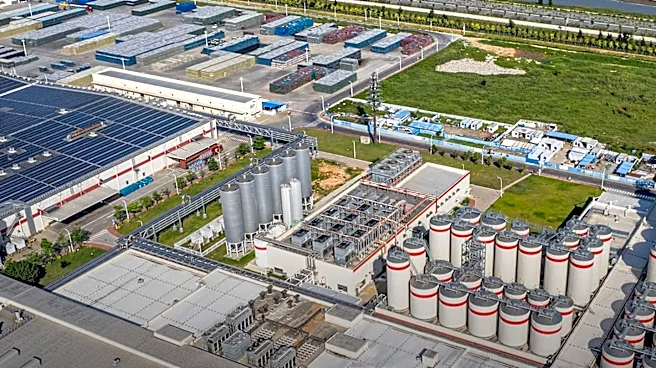
to produce 400 tonnes of cell-cultured food annually. This investment is part of a memorandum of understanding signed with the provincial government and Uiseong County. Following 2027, SeaWith intends to expand its production and logistics facilities to reach an annual capacity of 1,200 tonnes, positioning the site as a hub for global exports. The project is projected to create 46 jobs. Additionally, Ograe Agricultural Corporation will invest $19 million in a third plant in the same area, planning to consolidate its existing operations there by 2027. These agreements, totaling $33.9 million and 83 jobs, are expected to be implemented in phases as the companies develop their facilities. The Uiseong Biofood Valley, a 225,844-square-meter industrial complex dedicated to food production, was completed on the same day, alongside the groundbreaking for a $10.8 million Cell Culture Food Tech Research Support Center.
Why It's Important?
This development signifies a substantial investment in the cultivated meat sector, particularly in South Korea, which has designated Uiseong as a cell-cultured food regulation-free special zone. SeaWith's strategy to cut production costs by approximately 30% through a supply agreement with UK-based 3D Bio-Tissues for a cell culture supplement is crucial for the economic viability and scalability of cultivated meat. High production costs have been a significant barrier to the widespread adoption and commercialization of lab-grown meat globally. By establishing a large-scale production facility and a research support center, South Korea aims to become a global hub for the food industry, fostering technological development and commercialization in cellular agriculture. This initiative could set a precedent for other nations looking to invest in alternative protein sources, potentially influencing global food production trends and reducing reliance on traditional livestock farming, which has environmental implications.
What's Next?
SeaWith plans to have its GMP-certified production system operational by 2027, with further expansion to 1,200 tonnes of annual capacity after that. The Cell Culture Food Tech Research Support Center, currently under construction, will support companies in technology development, demonstration, and commercialization, potentially accelerating innovations in the cultivated meat industry. The province aims to attract more food technology companies to the Uiseong Biofood Valley, further solidifying its role as a testbed for the national food industry. The success of these initiatives in reducing costs and scaling production could influence regulatory frameworks and consumer acceptance of cultivated meat, both domestically and internationally. The phased implementation of these projects will be closely watched as indicators of the future trajectory of the cultivated meat market.
Beyond the Headlines
The investment in cultivated meat facilities like SeaWith's reflects a broader global trend towards sustainable food systems and addressing concerns related to environmental impact, animal welfare, and food security. The focus on cost reduction is paramount, as the industry has historically struggled with high production expenses, slow regulation, and consumer skepticism. If successful, these efforts could lead to a significant shift in how meat is produced and consumed, potentially disrupting traditional agricultural models. The development of specialized industrial complexes and research centers, such as the Uiseong Biofood Valley, highlights a strategic governmental approach to fostering innovation in food technology. This could also lead to new economic opportunities and job creation in the biotech and food manufacturing sectors, while simultaneously posing challenges for conventional livestock farmers who may need to adapt to evolving market demands.