






What's Happening?
Lisa Marei Schmidt, currently the director of the Brücke-Museum in Berlin, is set to assume the directorship of the Kunstmuseum Bern and Zentrum Paul Klee in Bern, Switzerland, starting August 1, 2027. In her new role, Schmidt will also chair the management
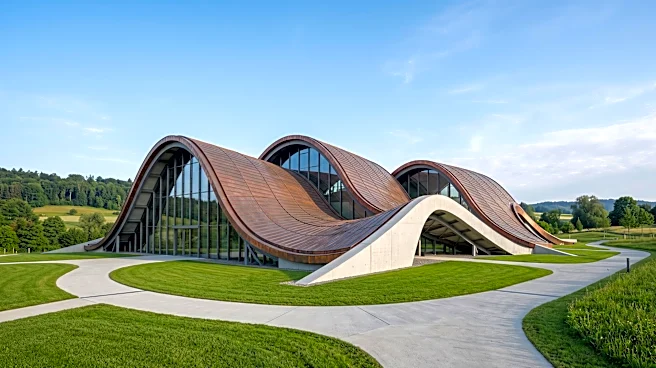
board for both institutions and be responsible for their artistic direction. The Zentrum Paul Klee, designed by Renzo Piano, houses the world's largest collection of works by Paul Klee, while the Kunstmuseum Bern is recognized as Switzerland's oldest fine art museum. Schmidt was selected from a pool of 97 candidates, with Jonathan Gimmel, president of the umbrella foundation, citing her professional expertise, international experience, and understanding of people as key factors in her appointment to guide the museums' next development phase.
Why It's Important?
While this appointment is primarily international, it holds relevance for the U.S. art world and cultural institutions through the global interconnectedness of the arts. The leadership of prominent European museums often influences curatorial trends, exhibition exchanges, and scholarly discourse that can impact U.S. museums and art patrons. Schmidt's background, including her work at the Brücke-Museum with exhibitions like 'Whose Expression? The Brücke Artists and Colonialism,' suggests a focus on critical historical re-evaluation and diverse perspectives. This approach could inspire similar programming and discussions within U.S. art institutions, fostering a more inclusive and globally aware art scene. U.S. art collectors, scholars, and institutions interested in Paul Klee or German Expressionism will be keenly observing the new direction these significant Swiss museums take under her leadership, potentially leading to future collaborations or loan exhibitions.
What's Next?
Upon assuming her role on August 1, 2027, Lisa Marei Schmidt is expected to begin shaping the artistic direction and development phase of the Kunstmuseum Bern and Zentrum Paul Klee. This will likely involve the planning of new exhibitions, acquisitions, and educational programs that reflect her vision and expertise. Her previous work indicates a potential focus on engaging with historical narratives and contemporary relevance within art. The art community, both in Europe and internationally, will be watching to see how she builds upon the distinct qualities of these two institutions. Potential reactions from stakeholders will include increased interest from international art critics and scholars, and possibly new opportunities for collaboration with other major art museums worldwide, including those in the U.S.
Beyond the Headlines
Schmidt's appointment to lead two historically significant Swiss art institutions carries deeper implications for the role of museums in contemporary society. Her stated belief that 'museums are places where art and people meet' and provide 'space for encounters, new perspectives and dialogue across society' highlights a growing trend in the museum world towards greater public engagement and social relevance. This perspective could influence how these institutions address complex historical narratives, such as those explored in her past exhibitions on colonialism and 'degenerate art.' Ethically, her leadership may further push the boundaries of museum responsibility in confronting difficult histories and promoting diverse voices. Culturally, her tenure could redefine the visitor experience, moving beyond passive observation to active participation and critical reflection, potentially setting a precedent for other international museums, including those in the U.S., to follow suit in their efforts to remain vital and relevant in a changing world.