









What's Happening?
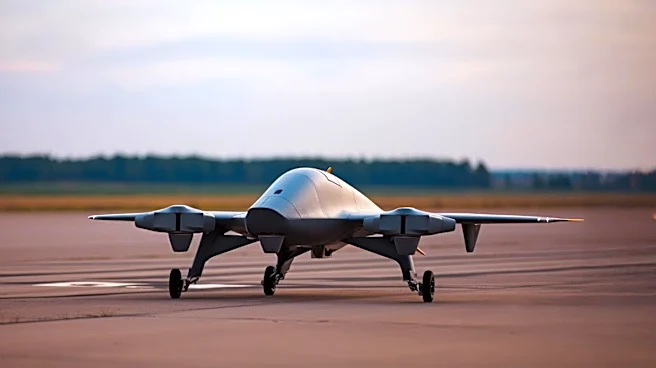
BAE Systems is advancing its work on an autonomous collaborative platform (ACP) and collaborative combat aircraft (CCA) capability, focusing on a new vehicle design known as 'Concept 2'. According to Anthony Gregory, business development director at BAE's
FalconWorks, the company is at an advanced stage in maturing its concept work. The new design aims to overcome limitations of previous models by offering better performance and aerodynamics, particularly for short take-off and landing (STOL) capabilities. BAE is engaging with the UK military, including the Royal Navy and Royal Air Force, to explore potential applications of this technology. The company is also pursuing a contract with the British Army to demonstrate an ACP operating alongside a Boeing AH-64E Apache attack helicopter.
Why It's Important?
The development of autonomous combat aircraft by BAE Systems represents a significant advancement in military aviation technology. This initiative could enhance the operational capabilities of the UK military by providing more versatile and efficient aircraft options. The focus on STOL capabilities is particularly relevant for operations from aircraft carriers, which could expand the strategic reach of the Royal Navy. Additionally, the collaboration with Certo Aerospace and the pursuit of an all-UK solution underscores the importance of domestic innovation in defense technology. This project could also influence global defense markets by setting new standards for autonomous military aircraft.
What's Next?
BAE Systems plans to continue its dialogue with the UK military to further develop and potentially deploy the 'Concept 2' vehicle. The company is also preparing to respond to the next phase of the Project Nyx activity, which involves demonstrating the capabilities of the Capstone uncrewed rotorcraft. As BAE progresses with these initiatives, it may face competition from other defense contractors, which could drive further innovation in the field of autonomous military aircraft. The outcomes of these projects could lead to new contracts and collaborations, shaping the future of military aviation technology.