






What's Happening?
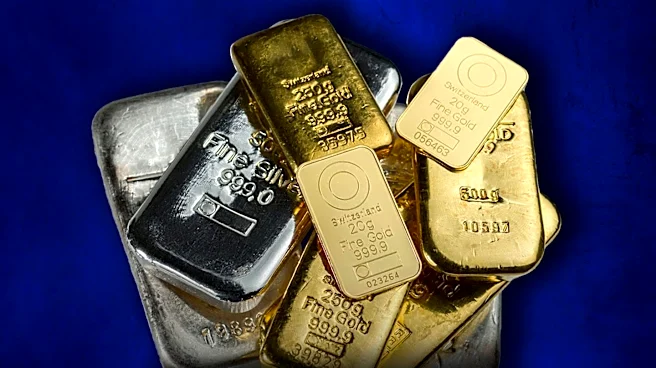
John Ing, President of Maison Placements, has forecasted that gold prices could reach $6,000 per ounce due to increasing U.S. federal debt and central-bank purchases. The U.S. federal debt stands at $39 trillion, with annual interest costs around $1 trillion.
Ing suggests that the Federal Reserve's inability to support Treasury demand without causing inflation could drive more capital into gold. Central banks have been increasing their gold reserves, with significant purchases from countries like China and Poland. Ing believes this trend will continue, bolstering gold's role as a reserve asset.
Why It's Important?
The potential rise in gold prices could have significant implications for the mining industry and investors. Higher gold prices would increase miners' profit margins, potentially leading to more investments in exploration and acquisitions. This could also impact the broader economy, as gold is often seen as a hedge against inflation and economic instability. The shift in central banks' reserve strategies might indicate a move away from reliance on the U.S. dollar, affecting global financial markets and U.S. economic policy.
What's Next?
If gold prices continue to rise, mining companies may ramp up production and exploration efforts. Investors might shift more capital into gold and related assets, seeking to capitalize on the bull market. Central banks could further diversify their reserves, potentially impacting currency markets. The U.S. government may face increased pressure to address its growing debt and the implications for the dollar's global standing.
Beyond the Headlines
The increasing focus on gold as a reserve asset highlights concerns about geopolitical risks and economic stability. Countries moving their gold reserves from traditional vaults in New York and London may reflect a desire to mitigate exposure to potential sanctions and political risks. This trend could lead to a reevaluation of global financial systems and reserve strategies.