








What's Happening?
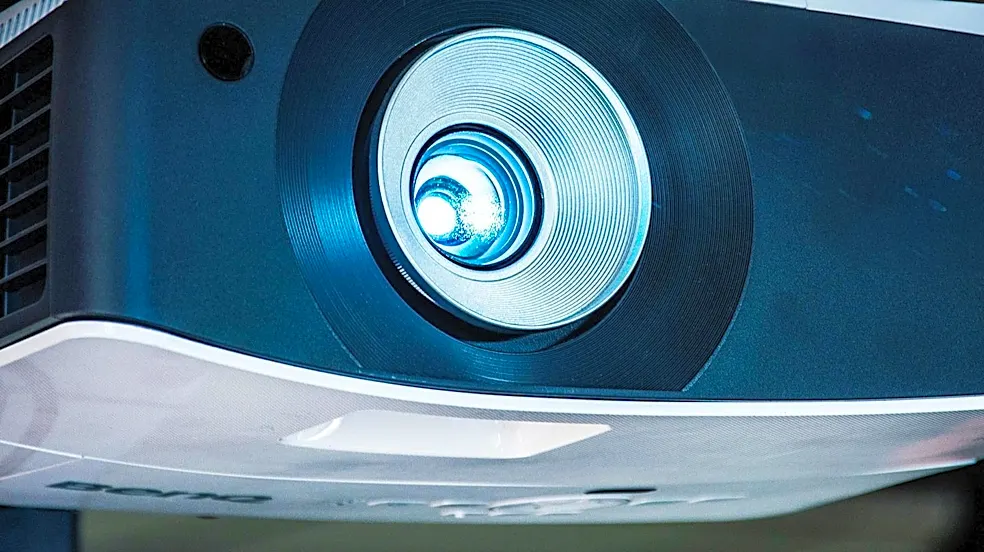
CNET has outlined its comprehensive methodology for testing and reviewing projectors, emphasizing both objective measurements and subjective viewing experiences. Geoffrey Morrison, a contributor with 25 years of experience, explains that manufacturer
specifications for lumens and contrast ratios are often misleading, necessitating real-world evaluation. CNET's testing involves initial setup and picture mode adjustments, focusing on movie or cinema modes for accuracy. Projectors are placed in a lab setting, typically 10 feet from a 102-inch diagonal screen, to measure brightness using a Minolta LS-100 meter and an AEMC CA813 illuminance meter. Contrast ratio is measured for both native and dynamic performance, with native contrast being prioritized for comparison. Color accuracy and color temperature are assessed using a C6 HDR5000 colorimeter and Calman software. Crucially, side-by-side comparisons are conducted using an HDMI splitter to ensure consistent source material across multiple projectors, allowing for direct visual assessment of performance.
Why It's Important?
This detailed testing methodology is vital for U.S. consumers navigating a complex market filled with often-inaccurate manufacturer claims. Projectors represent a significant investment, and CNET's rigorous approach provides transparency and reliability, helping consumers make informed purchasing decisions. By focusing on real-world performance rather than just specifications, CNET addresses the practical concerns of how a projector will actually look in a home environment. The emphasis on native contrast ratio and accurate color reproduction highlights key factors that contribute to a superior viewing experience. This commitment to thorough, independent testing empowers consumers to choose projectors that genuinely meet their needs for home theater, gaming, or other applications, ultimately saving them time and money by avoiding products that underperform their advertised capabilities.
What's Next?
CNET's continued commitment to this detailed testing process will likely set a standard for projector reviews, encouraging other review sites to adopt similar rigorous methodologies. As projector technology evolves with new light sources like lasers and LEDs, and advancements in resolution and HDR capabilities, CNET's testing framework will adapt to evaluate these new features effectively. Consumers can expect ongoing updates and comparisons of the latest models, helping them stay current with the best options available. The transparency of the testing process also builds trust with the audience, reinforcing CNET's role as a reliable source for technology evaluations. This consistent approach will be crucial as the market for home theater and portable projectors continues to grow and diversify.
Beyond the Headlines
The meticulous process of testing projectors, as detailed by CNET, underscores the broader challenge of evaluating complex technological products in a consumer-driven market. It highlights the gap between marketing claims and actual performance, necessitating independent verification. This situation is not unique to projectors but extends to many consumer electronics, where technical specifications can be manipulated or presented in ways that are not easily comparable. The methodology also touches upon the art and science of visual perception, acknowledging that while objective measurements are critical, the subjective viewing experience ultimately determines user satisfaction. This blend of quantitative and qualitative assessment is essential for providing holistic product reviews. Furthermore, the discussion of calibration's role and limitations offers valuable insight into the practicalities of achieving optimal performance, guiding consumers on when and if additional investments are truly worthwhile.