


What's Happening?
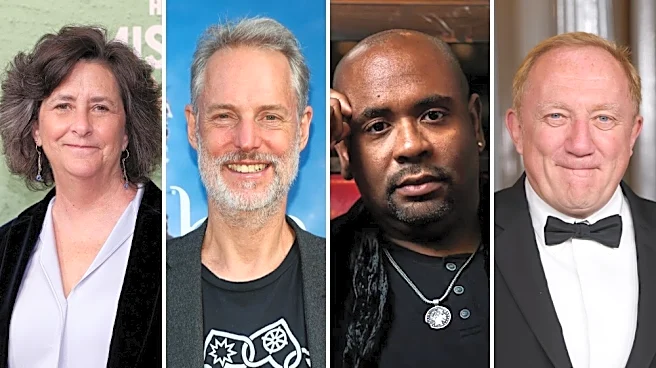
Skydance Media has announced a significant executive reshuffle following its acquisition of Warner Bros. Discovery assets. Bill Damaschke is stepping down as head of Warner Bros. Pictures Animation (WBPA), with Michael Ouweleen now overseeing a new Skydance Television
Animation group that unifies Nickelodeon, Nickelodeon Animation Studios, Adult Swim, Cartoon Network, Warner Bros. Animation, Cartoon Network Studios, and Hanna-Barbera Studios Europe. Additionally, Jennifer Dodge and Traci Balthazor have been appointed to jointly oversee feature animation at Paramount and Warner Bros. on an interim basis. Damaschke will remain for a transition period, while Chris Leahy will continue to manage day-to-day operations at the Warner feature studio, reporting to Dodge and Balthazor. This consolidation aims to streamline leadership across multiple animation entities.
Why It's Important?
This executive shakeup is a critical development for the U.S. animation industry, signaling a major consolidation of power and creative direction under Skydance. By bringing Nickelodeon and Cartoon Network—historically competitors—under a single leadership, Skydance aims to achieve significant operational efficiencies and potentially reshape the landscape of animated content production. The move could lead to altered commissioning strategies, budget allocations, and creative mandates across these studios. While Skydance has stated that the two animation labels will retain separate creative mandates, the unified leadership raises questions about the degree of independence each studio will maintain in greenlighting projects. This restructuring is likely driven by Skydance's stated goal of achieving at least $6 billion in annual savings within three years, which could impact staffing and production budgets.
What's Next?
The immediate future will involve a transition period as Bill Damaschke departs and the new leadership structure takes full effect. Jennifer Dodge and Traci Balthazor will navigate their interim roles overseeing feature animation at Paramount and Warner Bros., while Michael Ouweleen will begin integrating the various television animation studios under his expanded remit. Key questions remain regarding the practical implications of this consolidation: how will creative mandates truly be maintained, what will be the impact on animation budgets and staffing, and will studios be able to pitch projects to outside platforms if Skydance passes on them? The industry will closely watch for details on these operational changes, as they will define the future creative output and competitive dynamics of these major animation powerhouses.
Beyond the Headlines
The consolidation of major animation studios under a single corporate umbrella, as seen with Skydance's restructuring, reflects a broader trend in the entertainment industry towards vertical integration and cost-cutting. This move could lead to a more centralized approach to content creation, potentially impacting the diversity of animated programming and the opportunities for independent creators. While efficiency gains are a primary driver, there's a risk that distinct creative voices and unique studio cultures could be diluted in the pursuit of synergy. The long-term implications could include a shift in the types of stories told, the animation styles favored, and the overall competitive environment for talent within the U.S. animation sector, potentially leading to a more homogenized output or, conversely, a more strategically focused and impactful slate of projects.