








What's Happening?
Energy Fuels, a U.S.-based critical mineral company, has received conditional credit approval for up to A$180 million ($126 million USD) in government-backed financing for Phase 1 of its Donald Rare Earth and Mineral Sands Project in Australia. Export
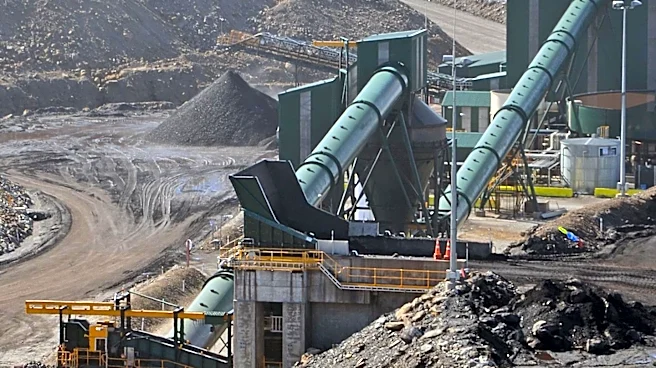
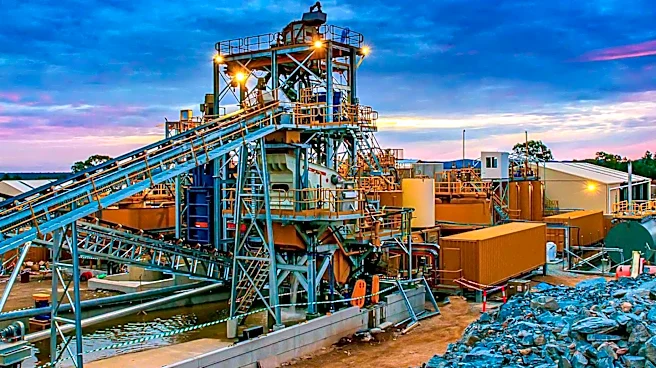
Finance Australia (EFA) has conditionally approved A$70 million, and the National Reconstruction Fund Corporation (NRFC) has conditionally approved A$110 million. These loans are intended to form part of a proposed A$200 million senior project finance debt facility, with an additional A$20 million expected from commercial lenders. The financing will cover development, construction, commissioning, and operating costs during the ramp-up phase of the project. The Donald Project, a joint venture with Australian company Astron, is located in Victoria, Australia, and is projected to produce an average of 9,000 tonnes per annum (tpa) of rare earth element concentrate (REEC) and 225,000 tpa of heavy mineral concentrate (HMC) for 40 years. Energy Fuels plans to purchase all REEC for processing at its White Mesa Mill in Utah, U.S.
Why It's Important?
This significant financing milestone is crucial for strengthening the upstream foundation of Energy Fuels' rare earth mine-to-magnet platform, directly impacting the U.S. supply chain for critical minerals. By securing a long-term source of monazite and xenotime sand feedstock from the Donald Project, Energy Fuels aims to develop a vertically integrated, Western-aligned supply chain for rare earth permanent magnets. This reduces U.S. reliance on foreign sources, particularly China, which currently dominates the rare earth market. The project will supply materials containing neodymium-praseodymium, terbium, and dysprosium, essential for high-tech applications, electric vehicles, and defense systems. This investment supports U.S. national security and economic interests by ensuring a stable and secure supply of these vital materials, fostering domestic processing capabilities, and creating a more resilient supply chain for advanced manufacturing in the United States.
What's Next?
The conditional approvals are designed to advance the financing package ahead of Energy Fuels' targeted final investment decision (FID) by the end of 2026. Discussions are ongoing regarding the remaining commercial term loan and bank guarantee facilities needed to complete the A$200 million debt facility. Once the FID is made and financing is finalized, Phase 1 of the Donald Project will proceed with development, construction, and commissioning. Energy Fuels is also working to secure a 49% stake in the joint venture by investing up to A$183 million in upfront equity. The project's output of rare earth element concentrate will be shipped to Energy Fuels' White Mesa Mill in Utah for further processing into oxides and subsequent downstream manufacturing, solidifying the U.S. role in the rare earth supply chain. The project is expected to sustain operations for 40 years, providing a long-term supply of critical minerals.
Beyond the Headlines
This development underscores a broader global effort by Western nations to establish independent critical mineral supply chains, moving away from concentrated sources. The U.S. government's indirect support through a U.S. company leveraging Australian government-backed financing highlights the international collaboration required to achieve mineral security. This project also showcases the strategic importance of Australia as a key partner in critical mineral supply, given its rich resources. The vertical integration strategy adopted by Energy Fuels, from mining in Australia to processing in Utah, represents a significant step towards creating a fully independent Western supply chain for rare earths. This could lead to increased investment in U.S. processing infrastructure and technological innovation in rare earth separation and refining. Furthermore, the long-term nature of the project (40 years) suggests a sustained commitment to building resilience in critical mineral supply, which will have lasting impacts on U.S. industrial capabilities and geopolitical standing.