






What's Happening?
Biophilic design is gaining traction in the U.S. as an approach to interior design that incorporates natural elements into built environments. This design philosophy, rooted in the concept of 'biophilia' (love of life), aims to connect people with nature
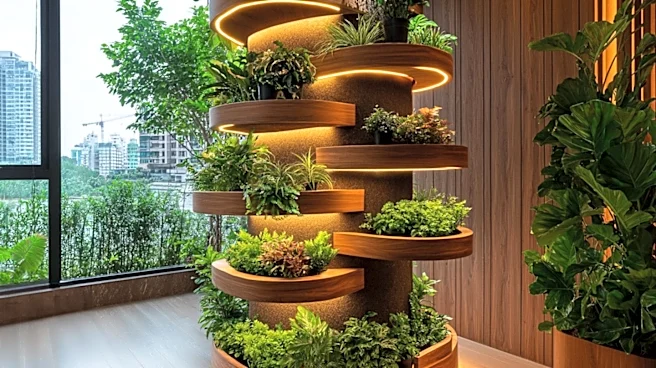
to create spaces that are more comfortable, safe, and healthy. Key elements include the use of plants (live or artificial), natural colors, materials like wood and water, and maximizing natural light and views. In healthcare settings, while live plants and porous surfaces are often avoided due to infection risks, photographs, artificial greenery, or nature-inspired patterns are utilized to achieve similar calming effects for patients, families, and staff. For homes, the focus is on reducing stress and promoting wellness through indoor plants, natural materials, water features, and organic shapes. This design approach is seen in various sectors, from residential to commercial and healthcare facilities, reflecting a growing understanding of how physical environments impact human health and well-being.
Why It's Important?
The integration of biophilic design principles holds significant importance for U.S. industries, public policy, and society. Research consistently demonstrates that exposure to natural elements can improve mental health, reduce anxiety, lower blood pressure, and boost productivity. This has direct implications for healthcare, where well-designed spaces can aid patient recovery and staff well-being, and for workplaces, where biophilic elements can enhance employee satisfaction and output. In education, studies show that students in schools with good daylight perform better on tests and have lower absenteeism. The emphasis on natural materials also aligns with sustainability goals, as many natural options are renewable, biodegradable, and require less energy to produce, contributing to a greener economy. Furthermore, by creating more calming and restorative environments, biophilic design can address societal challenges such as stress and mental health concerns, fostering a greater sense of well-being across various demographics.
What's Next?
The trend of biophilic design is expected to continue expanding across various sectors in the U.S. Architects and designers are increasingly incorporating these principles into new constructions and renovations, driven by growing awareness of their benefits. Future developments may include more sophisticated integration of nature-based solutions, such as moss matrices for urban cooling and stormwater management, though their long-term durability and structural implications require further consideration. There will likely be continued research into the specific impacts of different biophilic elements on human health and productivity, leading to more evidence-based design practices. Educational institutions and professional organizations are also expected to offer more programs and resources to train designers in biophilic principles. As demand for healthier and more sustainable environments grows, biophilic design will likely become a standard rather than an exception in U.S. architecture and interior design.
Beyond the Headlines
Beyond its aesthetic and health benefits, biophilic design touches upon deeper ethical and cultural dimensions. It represents a re-evaluation of humanity's relationship with the natural world, moving towards a more symbiotic existence within built environments. This approach challenges the traditional separation between urban living and nature, advocating for a seamless integration that acknowledges our innate biological need for connection with other life forms. Culturally, it reflects a shift towards valuing well-being and sustainability as core tenets of modern living. Legally, the increasing evidence of biophilic design's positive impacts could influence building codes and public policy, potentially leading to mandates for certain natural elements in public and private constructions. This could also spur innovation in material science, leading to the development of new, nature-inspired building materials and technologies that further enhance the biophilic experience while minimizing environmental footprint. The long-term shift could be towards cities and buildings that function more like living ecosystems, contributing to both human and planetary health.