








What's Happening?
The Department of Commerce has reported a 0.2% increase in retail sales for June 2026, aligning with economists' expectations. This growth follows a revised 1.0% increase in May, indicating that consumer spending remains robust despite ongoing inflation
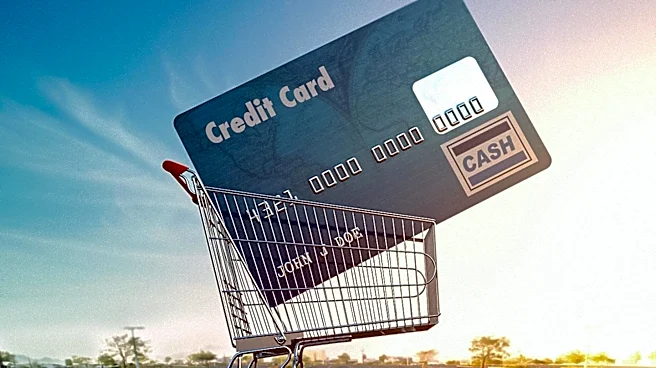
and higher borrowing costs. However, the LegalShield Consumer Stress Legal Index reveals a contrasting picture, showing a rise in financial stress among Americans. The index highlights increased legal assistance requests for foreclosures, bankruptcies, and consumer finance issues. The Foreclosure Index has reached its highest level since March 2020, and the Bankruptcy Index has surged by 28.7% year-over-year. These indicators suggest that while consumer spending appears healthy, it may be underpinned by 'buy now, pay later' schemes and other forms of consumer credit rather than improved household finances.
Why It's Important?
The reported increase in retail sales suggests a resilient consumer sector, which is crucial for economic growth. However, the underlying financial stress indicated by LegalShield's data points to a widening K-shaped economy, where economic recovery is unevenly distributed. This disparity could have significant implications for economic policy and the Federal Reserve's approach to managing inflation and interest rates. The reliance on consumer credit for spending growth raises concerns about the sustainability of this trend, particularly if financial conditions worsen. The data also highlight regional disparities, with the South experiencing the highest levels of financial stress, followed by the Midwest and West. This situation underscores the need for targeted economic policies to address the financial vulnerabilities of lower-income households.
What's Next?
The ongoing financial stress among consumers may prompt policymakers to reconsider economic support measures, especially as pandemic-era relief programs have expired. The Federal Reserve may need to balance its focus on price stability with the need to support consumer financial health. Additionally, businesses and financial institutions might adjust their strategies to accommodate the growing demand for consumer credit solutions. Monitoring the impact of these trends on consumer behavior and economic stability will be crucial in the coming months.
Beyond the Headlines
The increasing financial stress among consumers could lead to broader societal implications, such as heightened economic inequality and social unrest. The reliance on credit for consumer spending may also exacerbate long-term financial vulnerabilities, potentially leading to higher default rates and financial instability. These developments could influence public sentiment and political discourse, particularly regarding economic policy and social welfare programs.