






What's Happening?
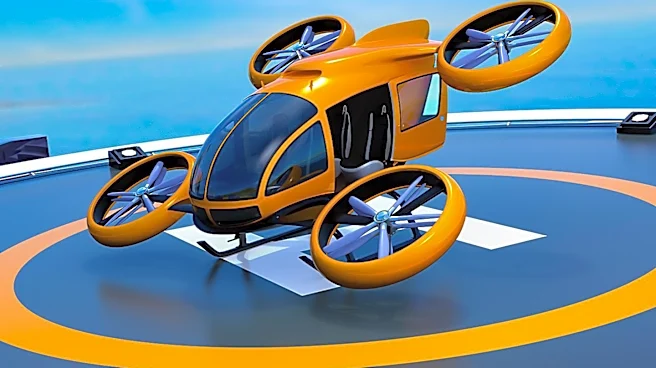
Allen Matkins represented Joby Aviation, Inc., a California-based company developing electric air taxis, in a strategic partnership with Atoms, an industrial AI and infrastructure company. This collaboration aims to acquire and develop vertiport sites
across the United States. The initial focus for these vertiport developments will be in Florida, New York, and Texas, where Joby Aviation is preparing to launch early operations as part of the White House-backed eVTOL Integration Pilot Program (eIPP). California is also included in these initial target markets. These vertiports are designed to function as multimodal transportation hubs, integrating electric aircraft, autonomous ground vehicles, and ridesharing services. A key feature of these hubs will be on-site power infrastructure to support charging and operational needs for the eVTOL aircraft.
Why It's Important?
This strategic partnership is a critical step in establishing the necessary infrastructure for the widespread adoption of urban air mobility in the United States. The development of dedicated vertiport networks is essential for the practical operation of eVTOL air taxi services, addressing logistical challenges such as takeoff/landing sites, charging, and passenger integration with existing transportation systems. By focusing on key states like Florida, New York, and Texas, Joby Aviation and Atoms are targeting high-density areas with significant potential for air taxi demand, aligning with the White House-backed eVTOL Integration Pilot Program. This initiative could significantly influence urban planning and transportation policy, potentially alleviating traffic congestion and offering new, faster travel options. The concept of multimodal hubs also suggests a future where various advanced transportation methods are seamlessly integrated, impacting urban development and economic activity in these regions. The success of this infrastructure development is crucial for the commercial viability and public acceptance of electric air taxis.
What's Next?
The immediate next steps for Joby Aviation and Atoms will involve the acquisition and development of the identified vertiport sites in Florida, New York, Texas, and California. This will entail navigating local zoning regulations, environmental assessments, and securing necessary permits. Concurrently, Joby Aviation will continue its efforts to achieve regulatory certification for its eVTOL aircraft, a prerequisite for launching commercial passenger services. The White House-backed eVTOL Integration Pilot Program will likely provide a framework and support for these early operations, potentially streamlining some of the regulatory processes. As the vertiports are developed, there will be a focus on integrating the necessary infrastructure for charging, air traffic management, and passenger services. The success of these initial vertiport deployments will be crucial in demonstrating the feasibility and benefits of urban air mobility, potentially paving the way for expansion into other U.S. cities.
Beyond the Headlines
The establishment of vertiport networks represents more than just new transportation infrastructure; it signifies a fundamental shift in how urban spaces might be utilized and perceived. The integration of electric aircraft, autonomous ground vehicles, and ridesharing services within these hubs could redefine urban mobility, creating new economic opportunities and challenges. Ethical considerations around noise pollution, visual impact, and equitable access to these services will become increasingly important as these networks expand. Furthermore, the reliance on on-site power for charging highlights the growing demand for sustainable energy solutions within urban environments and the need for robust electrical grids. This development could also spur innovation in related industries, such as battery technology, smart city infrastructure, and advanced air traffic control systems. The long-term success of this initiative will depend not only on technological advancements but also on effective public engagement and policy frameworks that address the societal implications of urban air mobility.