








What's Happening?
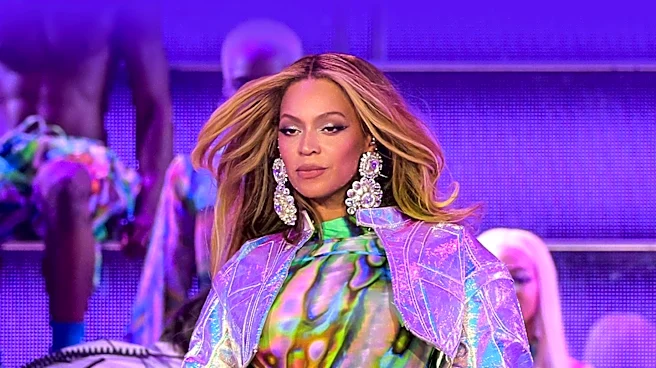
In February 2024, Beyoncé released a surprise album titled 'Renaissance: Act II,' featuring a country song 'Texas Hold 'Em' that quickly climbed to No. 1 on Billboard's country music charts. This achievement marked Beyoncé as the first Black female artist
to reach this milestone. The song has sparked discussions about genre blending and the Black roots of country music. It also inspired the Gardiner Brothers, professional Irish-American step dancers, to create a viral TikTok video where they perform an Irish step dance to the song, donning cowboy hats. The video has garnered over 42 million views, highlighting the cultural fusion and broad appeal of Beyoncé's music.
Why It's Important?
Beyoncé's success with 'Texas Hold 'Em' challenges traditional perceptions of country music, encouraging a broader understanding of its diverse roots. Her achievement underscores the potential for cross-genre collaborations and the breaking of racial and cultural barriers in the music industry. The viral video by the Gardiner Brothers further exemplifies this cultural blending, showcasing how music and dance can unite different traditions and audiences. This development may influence future musical collaborations and inspire artists to explore and integrate diverse cultural elements into their work.
What's Next?
The success of 'Texas Hold 'Em' and its viral dance video could lead to more artists experimenting with genre-blending in their music. It may also prompt the country music industry to embrace a more inclusive approach, recognizing the genre's diverse origins. Fans and artists alike might continue to explore and celebrate the interconnectedness of different musical traditions, potentially leading to new collaborations and innovations in the music scene.
Beyond the Headlines
The blending of Irish step dance with a country song by a Black artist highlights the often-overlooked multicultural roots of American music genres. This event serves as a reminder of the rich tapestry of influences that shape the music industry. It also challenges stereotypes about country music being predominantly 'white,' encouraging a reevaluation of its history and cultural significance. Such developments could foster greater appreciation and understanding of the diverse contributions to American music.