




What's Happening?
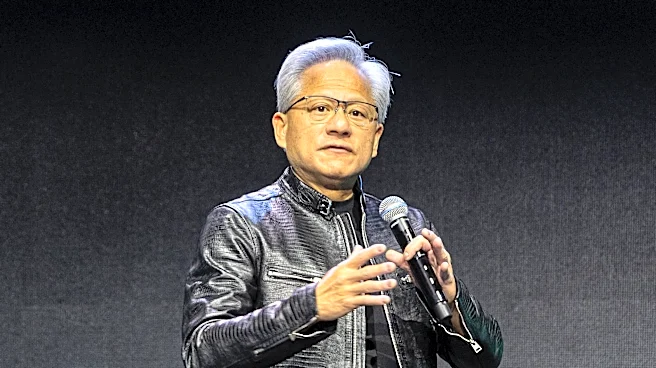
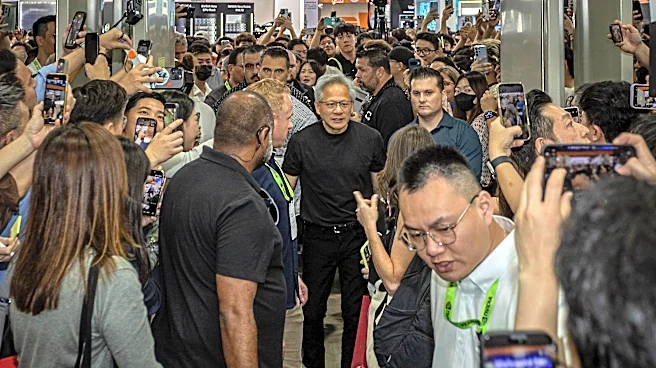
Jensen Huang, CEO of Nvidia, issued an apology for making "some terrible mistakes" a day after his unexpected return to the company's leadership. Huang also disclosed that he is undergoing daily therapy. This development is a major global news story,
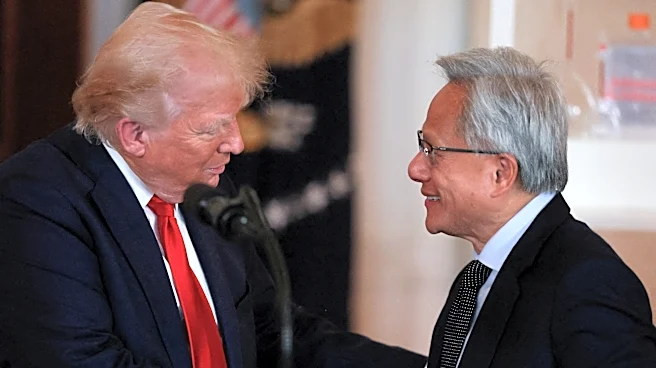
touching upon the global economy, the transformative role of technology, and the ongoing technological competition with China. The Free Press has extensively covered various angles of Huang's return, including analyses from Joe Nocera on why Huang was deemed "too big to fail," Aaron MacLean's concerns about the White House's role in facilitating his comeback, and Niall Ferguson's perspective on whether Huang can prevent an AI market crash. Matt Pottinger has also weighed in on the rationale behind Huang's return, while Ross Douthat has proposed a test for AI superintelligence based on its ability to perform Huang's job. Bethany McLean previously highlighted warning signs of financial instability within the AI sector.
Why It's Important?
Huang's apology and return are significant due to Nvidia's pivotal role in the global technology landscape, particularly in artificial intelligence and semiconductor manufacturing. His leadership directly influences the trajectory of AI development and the competitive dynamics between major global powers like the U.S. and China. The discussions surrounding his return, as highlighted by various commentators, underscore critical questions about corporate accountability, government intervention in strategic industries, and the potential for market volatility in the rapidly evolving AI sector. The implications extend to national security, economic stability, and the future of technological innovation, affecting investors, policymakers, and consumers worldwide who rely on advancements in AI and related technologies. The scrutiny also reflects broader concerns about the ethical and economic responsibilities of powerful tech leaders.
What's Next?
The immediate future will likely involve continued close observation of Nvidia's strategic direction under Huang's renewed leadership, especially concerning its role in the AI arms race and its interactions with global trade policies. The ongoing discussions about the White House's involvement in his comeback suggest potential policy debates regarding government influence in private sector leadership, particularly in critical technology areas. Stakeholders, including investors, competitors, and international governments, will be monitoring Nvidia's performance and any further statements from Huang regarding his past mistakes and future plans. The broader implications for the AI sector, including potential regulatory responses to market dominance and ethical considerations in AI development, will also remain a key focus. The company's actions and Huang's public persona will continue to shape perceptions of leadership in the tech industry.
Beyond the Headlines
Beyond the immediate corporate and economic implications, Huang's situation raises deeper questions about the nature of leadership in the modern technology era, particularly in sectors with immense global influence. His public apology and admission of therapy could signal a shift towards greater transparency and accountability from powerful CEOs, or it could be viewed as a strategic move to manage public perception. The narrative also touches upon the 'great man theory' of AI, questioning whether individual leaders can truly steer the course of such a rapidly advancing and complex technology. Furthermore, the extensive media coverage and diverse opinions reflect a societal grappling with the power wielded by tech giants and their leaders, prompting discussions about the balance between innovation, corporate responsibility, and national interests in an increasingly interconnected world. The incident may also influence future corporate governance practices in high-stakes industries.