





What's Happening?
Spanish and European aviation companies are making strides in developing electric aircraft for short-haul routes, with a focus on reducing emissions and operational costs. The European Union Aviation Safety Agency (EASA) reports that 25% of flights within
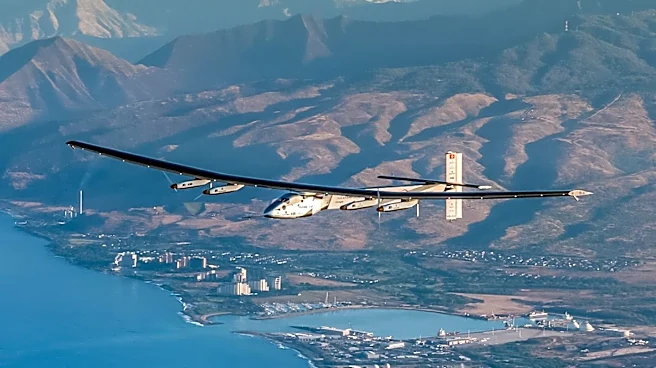
the EU cover less than 500 kilometers, making them ideal candidates for electric aviation. Spanish-Australian firm Dovetail is at the forefront, working on converting existing small aircraft from kerosene to electric power. The company has received permission from the Spanish Aviation Safety Agency to conduct experimental flights and is focusing on converting planes that carry 10 to 12 passengers. This approach is seen as cost-effective compared to building new aircraft. Dovetail aims to achieve fully electric flights of 100 to 150 kilometers initially, with potential expansion to 200 or 300 kilometers. Other European companies are also developing larger electric and hybrid aircraft, with some targeting certification by 2030.
Why It's Important?
The development of electric aircraft represents a significant shift in the aviation industry towards sustainability. By focusing on short-haul routes, these innovations could reduce the carbon footprint of air travel and make regional routes more economically viable. The conversion of existing aircraft to electric power could lower operational costs, potentially reviving routes that were previously unprofitable. This transition aligns with broader EU goals to reduce emissions and promote cleaner technologies. The success of these projects could set a precedent for other regions and industries, encouraging further investment in sustainable aviation technologies.
What's Next?
Dovetail and other companies are in the pre-certification phase with EASA, which is developing regulations for electric aircraft. As these technologies advance, airlines may begin integrating electric aircraft into their fleets, particularly for regional routes. The success of these initiatives could lead to increased funding and support for further research and development in electric aviation. Additionally, regulatory bodies will need to establish comprehensive guidelines to ensure the safety and efficiency of electric flights.