






What's Happening?
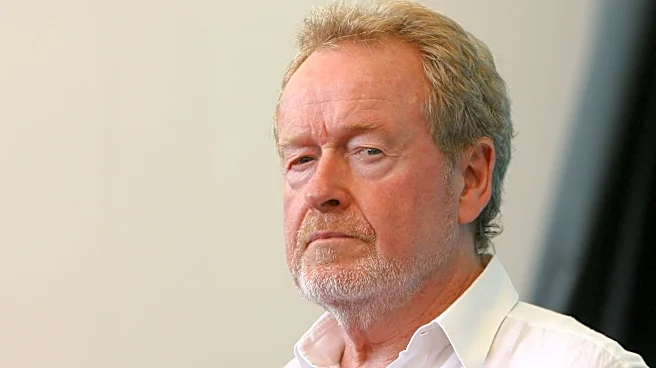
Renowned director Ridley Scott turned down a $20 million offer to direct 'Terminator 3,' despite producers agreeing to his request for a salary matching Arnold Schwarzenegger's. Scott revealed his decision to The Guardian, stating that his refusal was
based on the material itself rather than the financial incentive. He explained that he views the 'Terminator' franchise as 'pure comic strip' and felt he would be compelled to try and make it 'real,' which he believed was not in line with the essence of the series. Scott expressed pride in not being swayed by the substantial fee, emphasizing his commitment to directing projects that align with his creative vision. 'Terminator 3' was ultimately directed by Jonathan Mostow in 2003, grossing $433 million worldwide but not achieving the critical acclaim of its predecessors.
Why It's Important?
Ridley Scott's decision highlights a significant aspect of creative integrity within the film industry, particularly for established directors. His refusal of a lucrative offer underscores the value some filmmakers place on artistic vision over financial gain. This stance can influence how studios approach talent, potentially encouraging more respect for a director's creative input rather than solely focusing on commercial viability. For audiences, it reinforces the idea that certain directors prioritize the artistic quality and thematic consistency of their work, which can contribute to the overall quality and legacy of their filmography. This event also provides insight into the creative challenges of continuing successful franchises, where balancing original tone with new directorial interpretations can be a point of contention.
What's Next?
While Scott's decision regarding 'Terminator 3' is a past event, his stated philosophy continues to shape his career trajectory. He has consistently pursued projects that resonate with his artistic sensibilities, such as 'Alien,' 'Blade Runner,' and 'Gladiator.' Scott has also indicated a willingness to revisit the 'Alien' universe if a compelling idea emerges, suggesting that his future projects will remain driven by material he finds creatively engaging. This approach means that future collaborations with Scott will likely be contingent on the creative freedom and thematic depth offered by potential projects, rather than just the financial package. His continued influence in Hollywood will likely inspire other filmmakers to prioritize their artistic integrity.
Beyond the Headlines
Scott's rejection of the 'Terminator 3' offer delves into the broader discussion of artistic autonomy versus commercial pressures in Hollywood. In an industry often driven by box office returns and franchise extensions, his choice serves as a powerful example of a director maintaining control over his creative output. This decision implicitly critiques the 'for-hire' model of directing, where filmmakers are expected to execute a studio's vision regardless of their personal connection to the material. It also raises questions about the long-term impact of such choices on a director's legacy and the perceived authenticity of their work. Scott's stance reinforces the idea that true artistic success is not solely measured by financial metrics but also by the integrity and consistency of one's creative portfolio.