







What's Happening?
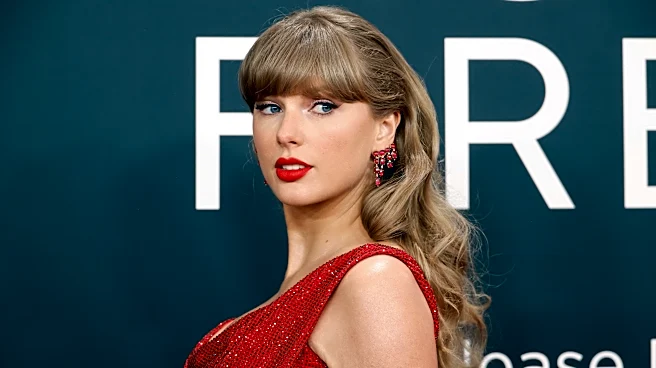
Taylor Swift's legal team has escalated its dispute with Las Vegas cabaret performer Maren Flagg, who is suing Swift over the title of her 2025 album, 'The Life of a Showgirl.' Swift's lawyers have threatened to file counterclaims against Flagg if her trademark
lawsuit proceeds, accusing Flagg of 'borderline harassing' Swift. Flagg, who performs as Maren Wade, claims Swift's album title is confusingly similar to her own 'Confessions of a Showgirl' trademark, which she registered in 2015 for a column, cabaret show, book, and podcast. Swift's legal team has dismissed Flagg's request to depose Swift for three hours as 'unduly burdensome' and 'unbelievable on its face.' Flagg's lawyers are using Swift's recent live performance of a song from the album and social media posts as evidence that Swift conducts business in California, challenging Swift's previous claims that no album songs had been performed live and that she lacked sufficient connection to California for jurisdiction.
Why It's Important?
This legal battle highlights significant issues within intellectual property law, particularly concerning trademark infringement and celebrity branding. For Taylor Swift, a global superstar, the lawsuit represents a challenge to her artistic and commercial endeavors, potentially impacting the marketing and distribution of her album and merchandise. For Maren Flagg, the case is about protecting her established brand and preventing what she perceives as dilution or confusion caused by a more famous entity. The dispute also raises questions about jurisdiction and the extent to which a celebrity's activities, such as filming music videos or performing at galas, establish a legal presence in a state. The outcome could set precedents for how trademark claims are handled when a smaller artist challenges a major one, and how courts interpret 'doing business' in the context of modern celebrity activities.
What's Next?
Judge Serena Murillo has postponed the hearing on Swift's motion to dismiss the case until February 3, 2027, and is scheduled to hear arguments regarding the new evidence and Swift's request to freeze discovery on December 9. Flagg's lawyers are pushing to depose Swift and a representative from TAS Rights Management, Swift's intellectual property company, to gather evidence about their California business dealings. Swift's team has refused Flagg's offer to proceed with the case against Universal Music and Bravado while holding off on claims against Swift and TAS Rights Management. The threat of a countersuit indicates a hardening of positions from Swift's side, suggesting a prolonged legal battle. The court's decisions on discovery and jurisdiction will be crucial in determining the future trajectory of this high-profile trademark dispute.
Beyond the Headlines
Beyond the immediate legal implications, this case underscores the power dynamics inherent in disputes between global celebrities and lesser-known artists. The resources and legal teams available to a superstar like Taylor Swift can create an intimidating environment for a smaller artist. It also brings to light the meticulous nature of trademark law, where even seemingly common phrases can be protected if they are associated with a specific brand or service. The use of a codename ('Quarry') for Swift's music video filming also points to the lengths celebrities go to maintain privacy and control information, which can become a point of contention in legal proceedings. This case could influence how artists, both famous and emerging, approach naming conventions and trademark registrations in the entertainment industry.