







What's Happening?
The Metals Company, a deep-sea mining firm, experienced a significant stock decline of 28.2% in the first half of 2026, despite a previous surge of 451% in 2025. This downturn comes as the company navigates bureaucratic challenges and environmental advocacy
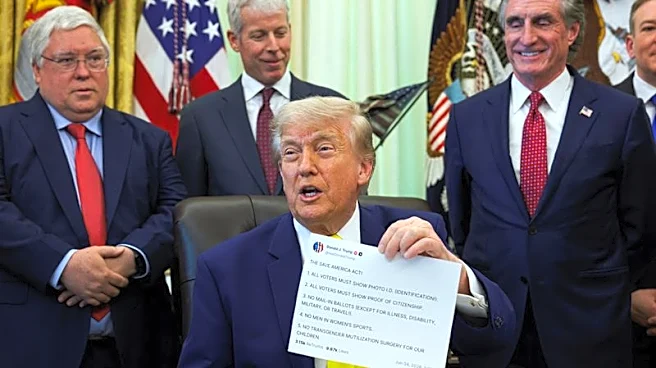
pressures while striving to commence commercial operations for extracting minerals like copper, cobalt, nickel, and manganese from seafloor nodules. In April 2025, the company benefited from executive orders by President Trump aimed at boosting domestic production of critical minerals, which initially buoyed investor confidence. However, despite positive developments in 2026, such as the National Oceanic and Atmospheric Administration (NOAA) finding the company's exploration license application compliant and an agreement with Allseas for a commercial nodule collection system, the stock has not maintained its upward trajectory.
Why It's Important?
The stock volatility of The Metals Company highlights the inherent risks and challenges faced by innovative companies in the early stages of commercial operations, particularly in the deep-sea mining sector. The company's progress in securing regulatory approvals and partnerships is crucial for advancing its operations, which could significantly impact the supply of critical minerals essential for various industries, including technology and renewable energy. The decline in stock value, despite these advancements, underscores the market's cautious approach to speculative investments and the potential for profit-taking by investors. The outcome of The Metals Company's endeavors could influence future regulatory frameworks and investment strategies in the mining industry.
What's Next?
The Metals Company is expected to release its second-quarter 2026 earnings report later this summer, which will provide further insights into its financial health and operational progress. Investors and industry stakeholders will be closely monitoring this report for indications of the company's ability to overcome current challenges and capitalize on its regulatory and partnership achievements. The company's future performance will likely depend on its continued ability to navigate regulatory landscapes, secure necessary certifications, and effectively manage market expectations.