








What's Happening?
A U.S. liquefied natural gas (LNG) shipment has reached China for the first time since trade tensions between Washington and Beijing halted direct shipments. The cargo, carried by the Al Fat'h LNG Tanker, was loaded at Venture Global LNG's Plaquemines
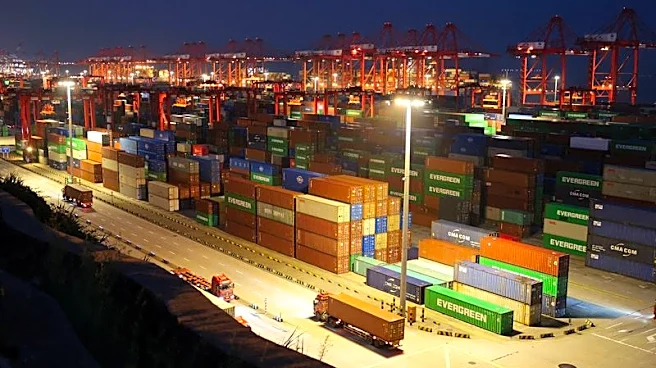
Export Plant in Louisiana and arrived in China's Hainan province. Despite its arrival, analysts suggest the LNG may not enter China's domestic market due to the bonded storage status at Yangpu port, which allows for re-exports without import duties. This flexibility is crucial as Chinese importers face high tariffs on U.S. LNG, including a 15% tax, despite a temporary suspension of an additional 24% tariff. The domestic demand in China remains weak, particularly in industrial sectors, prompting importers to consider re-exporting the LNG to other countries where higher Asian prices offer better profit margins.
Why It's Important?
The arrival of U.S. LNG in China highlights ongoing complexities in international trade relations and energy markets. The ability to re-export LNG without incurring import duties provides Chinese importers with strategic flexibility, allowing them to optimize their portfolios and respond to domestic supply issues. This situation underscores the impact of tariffs on trade flows and the importance of bonded storage facilities in global energy logistics. The high Asian LNG prices, reaching nearly $20 per million British Thermal Units, contrast sharply with lower prices in Europe and the U.S., influencing trade decisions. The U.S., as the largest LNG exporter, continues to navigate these challenges, affecting its trade balance and energy sector dynamics.
What's Next?
The future of U.S.-China LNG trade will likely depend on the resolution of tariff disputes and shifts in global energy demand. Chinese importers may continue to leverage bonded storage for re-exports, especially if domestic demand remains sluggish. The U.S. energy sector will need to adapt to these market conditions, potentially seeking alternative markets or negotiating tariff reductions. Additionally, geopolitical developments and energy policies in both countries could influence future trade agreements and energy strategies.