



What's Happening?
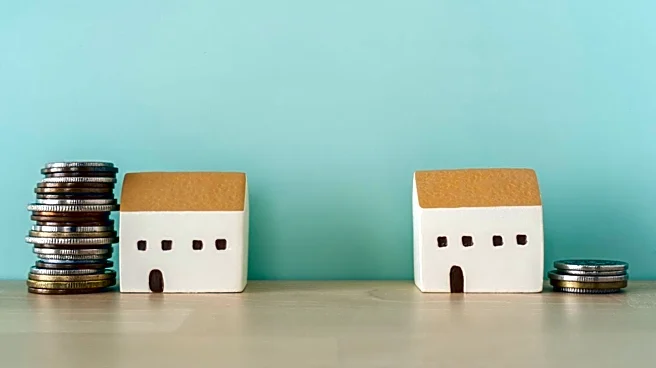
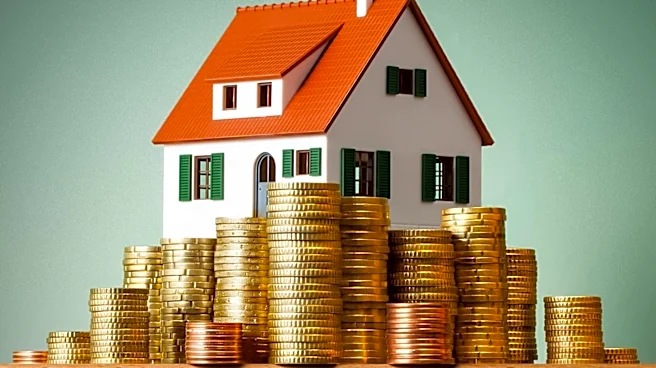
A new analysis by Zillow indicates that renting a typical home in the U.S. was $1,066 per month cheaper than buying one in August, resulting in an annual advantage of $12,792 for renters. This gap has expanded as homeownership costs have risen at a significantly
faster rate than rents. Over the past six months, the typical monthly cost for a new homebuyer increased by $140, while rent only rose by $32, meaning ownership costs grew more than four times as much in dollar terms. Renting is now more affordable than buying in all 50 of the largest U.S. metropolitan areas. In New York City, renters save over $31,000 annually compared to buyers, with a typical monthly rent of $3,615 versus an estimated $6,244 for a new homeowner's payment. The analysis assumes a 10% down payment on a 30-year fixed-rate mortgage at 6.67%, including property taxes and insurance.
Why It's Important?
This widening financial gap between renting and buying has profound implications for the U.S. housing market and individual financial planning. It challenges the long-held American dream of homeownership, making it increasingly inaccessible for many, particularly in expensive coastal cities. The data suggests a significant shift in economic incentives, where renting, once considered a temporary phase, now offers a substantial financial advantage. This trend could lead to a larger, more permanent renter population, impacting long-term wealth accumulation and community stability. For industries, this means continued demand for rental properties and potentially less demand for new home sales, affecting construction, real estate agencies, and mortgage lenders. The increased cost of homeownership also exacerbates wealth inequality, as those unable to afford buying miss out on potential equity growth, while those who can afford it face higher financial burdens.
What's Next?
The growing disparity between renting and buying costs is likely to continue influencing housing market dynamics across the U.S. As homeownership becomes less attainable, demand for rental properties is expected to remain strong, potentially leading to continued, albeit slower, rent increases. Policymakers may face increased pressure to address housing affordability, possibly through initiatives aimed at reducing homeownership costs or expanding affordable rental options. For individuals, the financial calculus will increasingly favor renting, at least in the short to medium term, prompting more people to consider long-term rental strategies. The real estate industry will need to adapt to these changing consumer preferences, with a potential shift in focus from sales to property management and rental development. The long-term implications could include a re-evaluation of the traditional pathways to financial stability and wealth building in the U.S.
Beyond the Headlines
The current housing market trends, where renting significantly outperforms buying financially, reveal deeper societal and economic shifts. Beyond the immediate cost savings, this situation challenges the cultural narrative of homeownership as the primary path to financial security and upward mobility in the U.S. The inaccessibility of homeownership for a growing segment of the population could lead to increased social stratification, as those who cannot afford to buy are excluded from a traditional means of wealth accumulation. This also raises ethical questions about equitable access to housing and the role of government in ensuring basic living standards. The phenomenon could also contribute to greater labor mobility, as renters are less tied down by property ownership, potentially impacting local economies and community cohesion. The long-term psychological and social effects of a generation increasingly priced out of homeownership warrant further examination, as they could reshape American society in fundamental ways.