




What's Happening?
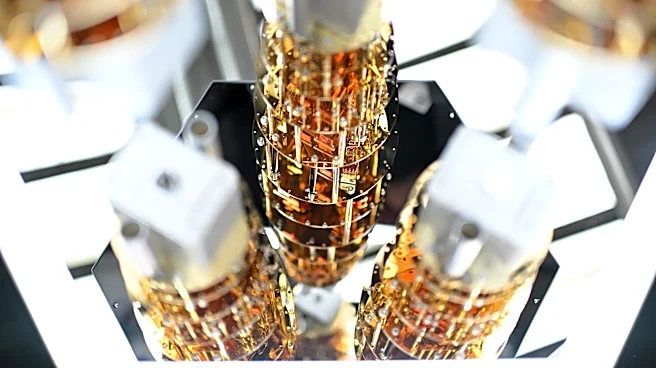
SAP and planqc have achieved the first integration of a neutral-atom quantum computer into an SAP environment. This milestone was announced at Quantum Day Munich by SAP, held at the SAP Labs Campus in Garching. The event was attended by SAP CFO Dominik
Asam, Bavaria’s Minister of Science and the Arts Markus Blume, and Dr. Sabine Seelenmeyer, Head of Quantum Enterprise Decision Computing at SAP. This partnership combines SAP's leadership in enterprise software with planqc's neutral-atom quantum computing technology. Dr. Carsten Polenz, Global Head of Quantum at SAP, highlighted that quantum computing offers new possibilities for complex problem-solving, viewing neutral-atom quantum computers as a promising approach for scalable quantum computing. The immediate focus is on integrating these capabilities into business processes to make them accessible to customers, with planqc enabling direct development on real quantum hardware.
Why It's Important?
This integration marks a significant step in bringing advanced quantum computing capabilities to enterprise-level business processes. For U.S. businesses utilizing SAP's extensive software ecosystem, this development could eventually lead to transformative improvements in data analysis, optimization, and complex problem-solving. Industries such as finance, logistics, and manufacturing, which rely heavily on intricate calculations and large datasets, stand to gain from the enhanced computational power offered by quantum technology. The ability to develop directly on real quantum hardware, as emphasized by Dr. Polenz, accelerates the path toward practical business applications, potentially giving early adopters a competitive edge. This collaboration also underscores the growing trend of integrating cutting-edge scientific advancements into commercial software platforms, pushing the boundaries of what enterprise systems can achieve.
What's Next?
Following this integration, SAP plans to establish its first Quantum Agents and a dedicated quantum team in Munich. The next phase involves testing initial business scenarios on planqc neutral-atom quantum hardware, with these tests scheduled to commence in 2027. This timeline suggests a phased approach to rolling out quantum-powered solutions, starting with pilot programs and gradually expanding their application. The collaboration aims to translate Europe's strong research base in quantum computing into competitive products and a sustainable industry. Dr. Alexander Glätzle, Co-Founder and CEO of planqc, noted that the challenge is to convert scientific strengths into practical applications within enterprise environments. This indicates a future where quantum computing could become an integral part of how companies manage their most complex business processes.
Beyond the Headlines
The integration of neutral-atom quantum computing into enterprise software like SAP represents a deeper shift in how businesses approach computational challenges. Beyond immediate applications, this development could foster a new era of innovation in areas previously limited by classical computing power. Ethical considerations around data security and the responsible use of powerful algorithms will become increasingly pertinent as quantum capabilities mature. Legally, the intellectual property generated from quantum-enhanced solutions could lead to new frameworks for ownership and licensing. Culturally, it signifies a growing acceptance and adoption of highly advanced scientific concepts within mainstream business operations, potentially inspiring further investment and talent development in quantum technologies globally. This move positions quantum computing not just as a scientific curiosity but as a practical tool for economic advancement.