




What's Happening?
Día de los Muertos, a holiday observed on November 1 and 2, is celebrated with various traditions that blend Indigenous Mesoamerican beliefs with Catholic observances. This celebration, which has roots stretching back over 3,000 years, focuses on honoring
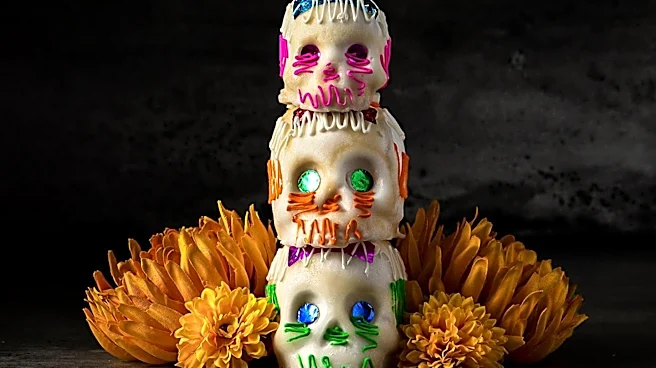
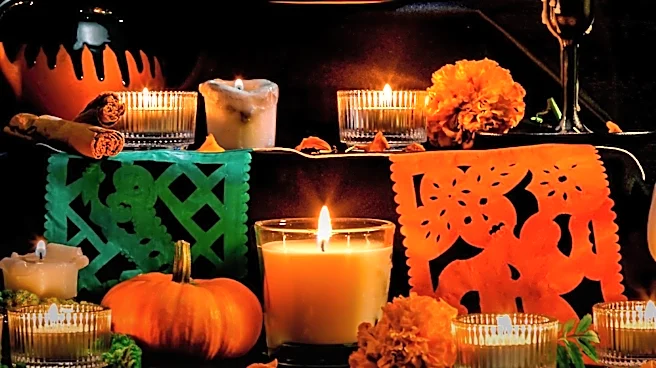
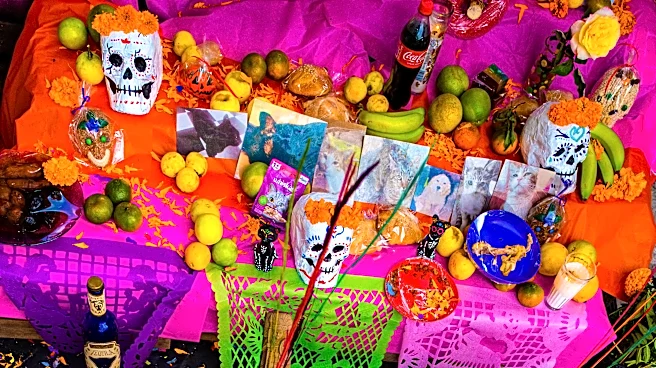
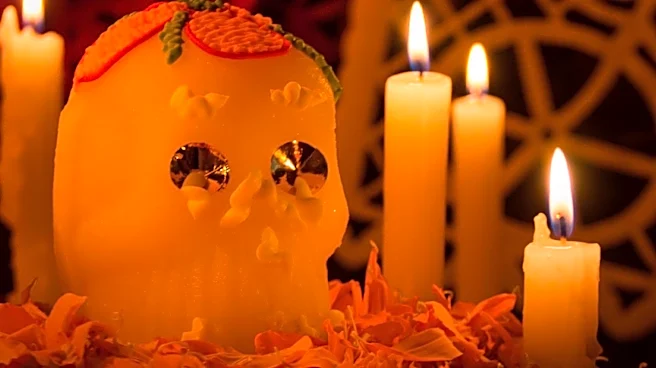
and remembering deceased loved ones. A central tradition is the creation of 'ofrendas,' or altars, which are adorned with photographs, candles, flowers, food, and personal belongings of the departed. These altars are set up in homes or community spaces and include items like 'pan de muerto' (bread of the dead), 'papel picado' (cut paper), and water, each representing different elements. Marigold flowers are commonly used to guide souls back with their fragrance and bright color. The holiday is not a somber event but rather a joyful homecoming, emphasizing the cycle of life and death and bringing families together to share stories and reconnect with ancestors. Newer traditions include sugar skulls and elegant skeleton figurines, popularized by artist José Guadalupe Posada, symbolizing the equality of souls and mocking the fear of death. Community events often feature parades, vendors, and communal ofrendas, welcoming anyone who wishes to honor deceased loved ones.
Why It's Important?
The celebration of Día de los Muertos in the U.S. is important as it highlights the rich cultural diversity and the enduring influence of Hispanic traditions within American society. It provides a significant cultural anchor for many communities, particularly those with Mexican and Latin American heritage, allowing them to maintain and pass on ancestral customs. This holiday fosters intergenerational connections and strengthens community bonds by creating shared spaces for remembrance and celebration. The public observance of Día de los Muertos also contributes to a broader understanding and appreciation of diverse cultural practices, promoting inclusivity and cultural exchange. Economically, the holiday can stimulate local businesses through the sale of traditional items like marigolds, sugar skulls, and specific foods, as well as through community events and festivals. For individuals, it offers a unique and culturally specific way to process grief and celebrate life, viewing death not as an end but as part of a continuous cycle, which can have positive psychological and social impacts.
What's Next?
As Día de los Muertos continues to gain broader recognition in the U.S., it is likely to see continued growth in public celebrations and educational initiatives. More communities and cultural institutions are expected to host events, parades, and workshops to engage a wider audience. There may be an increase in demand for traditional crafts and foods associated with the holiday, further supporting cultural artisans and businesses. Educational programs in schools and community centers could expand to teach about the historical and cultural significance of Día de los Muertos, fostering greater understanding and respect for diverse traditions. The holiday's themes of remembrance and the celebration of life are universally appealing, suggesting its continued integration into the American cultural landscape, potentially leading to more widespread participation beyond specific ethnic communities. This growing visibility could also encourage more academic research and artistic expressions related to the holiday.
Beyond the Headlines
Beyond its immediate celebratory aspects, Día de los Muertos carries profound philosophical and ethical implications. It challenges Western perspectives on death, which often emphasize mourning and separation, by instead promoting a view of death as a natural part of life's cycle and an opportunity for joyful remembrance and reconnection. This cultural perspective can offer alternative frameworks for grief and loss, encouraging a more integrated approach to mortality. Legally and socially, the increasing prominence of Día de los Muertos in the U.S. underscores ongoing discussions about cultural preservation, religious freedom, and the recognition of diverse heritage within a multicultural society. It also highlights the importance of cultural competency in public spaces and institutions. The holiday's emphasis on community and family ties reinforces social cohesion, providing a counter-narrative to increasingly individualized societal trends. Furthermore, the artistic expressions associated with Día de los Muertos, such as 'ofrendas' and 'calaveras,' contribute to the rich tapestry of American art and cultural expression, influencing contemporary artists and designers.