








What's Happening?
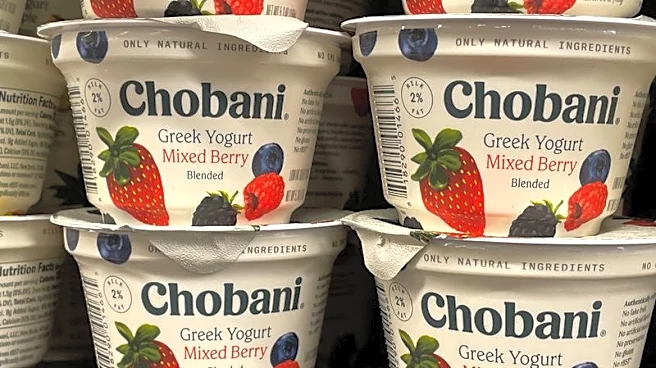
Danone has initiated legal proceedings against Chobani in the United States, alleging that Chobani has been misleading consumers regarding the protein content in its yogurt products. The lawsuit, filed in New York, claims that Chobani has manipulated
serving sizes to suggest that its yogurt contains a comparable amount of protein to Danone's Oikos Pro. Specifically, Danone argues that Chobani lists a serving size of 6.7 ounces to claim 20 grams of protein per serving, whereas the industry standard is 5.3 ounces. This legal action follows a previous lawsuit by Danone against Chobani concerning the packaging and marketing of cold-brew coffee products, where Danone accused Chobani of using packaging and slogans similar to its own Stok coffee brand.
Why It's Important?
This lawsuit highlights the competitive nature of the food industry, particularly in the growing market for protein-rich products. As consumer interest in protein continues to rise, companies are increasingly emphasizing the protein content of their products. The outcome of this lawsuit could have significant implications for marketing practices and labeling standards within the industry. If Danone's claims are upheld, it may lead to stricter regulations and scrutiny over how companies present nutritional information, potentially affecting marketing strategies and consumer trust. This case also underscores the importance of intellectual property rights and the lengths companies will go to protect their brand identity and market share.
What's Next?
The legal proceedings will likely involve a detailed examination of marketing practices and nutritional labeling standards. Both companies may need to provide evidence to support their claims, and the court's decision could set a precedent for how serving sizes and nutritional content are presented in the food industry. Depending on the outcome, other companies may need to reassess their marketing strategies to ensure compliance with any new standards that may emerge. Additionally, the case could prompt regulatory bodies to review and possibly tighten guidelines on food labeling to prevent misleading claims.