
What's Happening?
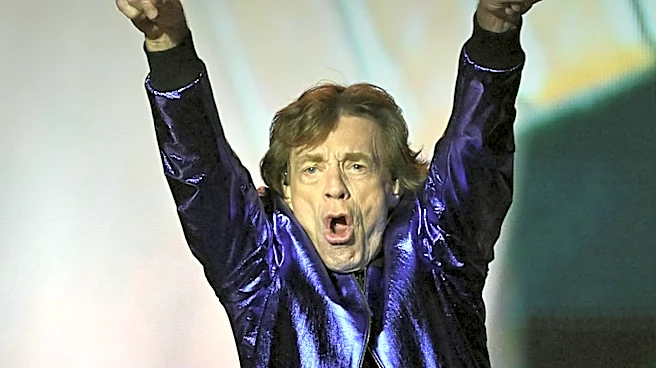
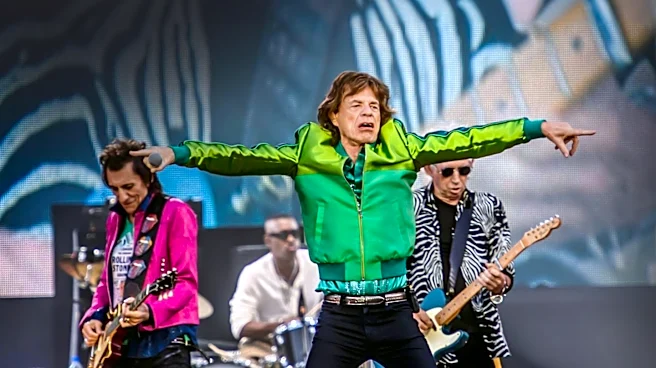
The Rolling Stones' orchestral rendition of 'Out of Time,' fronted by Mick Jagger, was released by Decca as a single from the 'Metamorphosis' compilation. This version, originally cut in 1966, features
sweeping strings and a big-room pop drama sound, contrasting with the stripped-back marimba groove of the 'Aftermath' version. The track was shelved for nearly a decade before Allen Klein released it as a single in 1975. In September 1975, three competing versions of 'Out of Time' simultaneously appeared in the lower reaches of the British charts: The Rolling Stones' orchestral rendition, a reissued version by Chris Farlowe, and another by Dan McCafferty. This unusual chart event highlighted the song's winding journey, which began nearly a decade earlier. The 'Metamorphosis' compilation itself is an archival collection of outtakes, demos, and lesser-known recordings, offering insights into the Stones' creative process and studio collaborations.
Why It's Important?
The re-emergence and chart performance of the 'Metamorphosis' version of 'Out of Time' underscore the enduring legacy and complex discography of The Rolling Stones. This particular release highlights how studio experimentation and collaborative efforts shaped the band's sound, even with tracks that were initially shelved. The involvement of musicians like Jimmy Page, who contributed guitar work before his rise with Led Zeppelin, illustrates the interconnectedness of the 1960s British rock community. The song's journey from a 1966 studio creation, initially conceived for Chris Farlowe, to a distinctive Stones single in 1975, demonstrates the dynamic nature of music production and release strategies. It also showcases how a single backing track could be adapted and reinterpreted across different artists and eras, becoming a recurring chart curiosity and a prized artifact for fans.
What's Next?
While the article primarily focuses on historical releases, the continued discussion and analysis of such archival material suggest an ongoing interest in the deeper cuts and alternative versions of classic rock songs. For The Rolling Stones, this could mean continued exploration of their extensive vault for future re-releases or special editions, catering to fans eager to trace their creative connections and studio craft. The historical context provided by compilations like 'Metamorphosis' offers a rich vein for music historians and fans to delve into, potentially leading to new interpretations or appreciation of the band's work. The enduring appeal of these tracks also indicates a potential for their inclusion in documentaries, retrospectives, or even modern media, ensuring their continued relevance.
Beyond the Headlines
The story of 'Out of Time' and its multiple versions delves into the intricate legal and artistic control over musical works, particularly concerning outtakes and unreleased material. Allen Klein's role in releasing the 'Metamorphosis' version in 1975, nearly a decade after its initial recording, points to the business side of music rights and catalog management. This situation also highlights the creative tension and evolution within bands, as different versions of a song can reflect varying artistic directions or production choices over time. The fact that the song was originally conceived for another artist, Chris Farlowe, before Mick Jagger's own lead vocal was added for a later release, illustrates the collaborative and sometimes fluid nature of songwriting and production in the 1960s British music scene. It also raises questions about artistic intent versus commercial viability in the music industry.