





What's Happening?
Jensen Huang has been reinstated as CEO, president, and director of Nvidia after the company's board unanimously voted for his return. Huang had stepped down on November 12, and the board initially stated on November 17 that there were no plans for his return. During
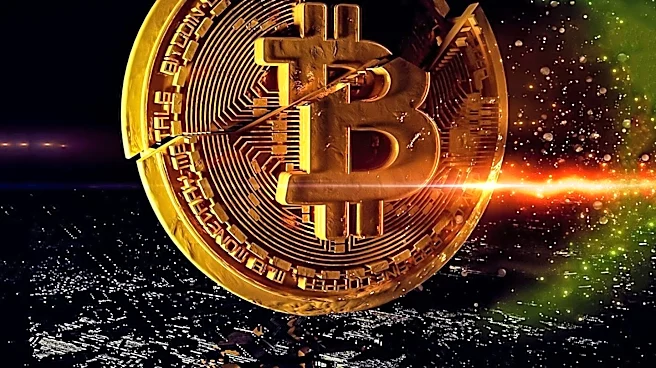
his absence, Nvidia's stock experienced a significant drop of 27.7%, falling from $174 on November 11 to $126 by November 20. Following his reinstatement, Nvidia's stock surged by 31.4% to $165 by November 23, recovering most of its losses, though it remains about 5% below its pre-departure level. Concurrently, Bitcoin's value fell by 17.3% during Huang's absence, dropping from $73,974 on November 11 to $61,172 on November 22. Despite a slight recovery to around $62,601, Bitcoin still needs an approximately 18% increase to reach its November 11 price.
Why It's Important?
The swift reinstatement of Jensen Huang at Nvidia highlights the significant influence of key leadership figures on corporate stock performance and investor confidence, particularly in the technology sector. Nvidia's rapid stock recovery post-reinstatement demonstrates how market sentiment can quickly shift based on leadership changes. For Bitcoin, its struggle to regain lost value, despite the tech sector's rebound, underscores its vulnerability to broader economic factors and investor behavior. The outflows from Spot Bitcoin ETFs, totaling $669 million on November 20, and the Federal Reserve's decision to maintain its benchmark interest rate at 4.00% are significant hurdles. These factors suggest that Bitcoin's performance is not solely tied to the tech market's movements but is also heavily influenced by regulatory environments and investor sentiment towards risk assets, impacting its potential for recovery.
What's Next?
Nvidia's stock will likely continue to be monitored for its full recovery to pre-Huang departure levels, with investor confidence potentially stabilizing further now that leadership is re-established. Colette Kress will continue in her role as CFO, and the board's investigation into the circumstances surrounding Huang's brief departure is ongoing. For Bitcoin, its ability to recover will depend on several factors, including future movements in AI stocks, the Federal Reserve's monetary policy decisions, and investor sentiment towards cryptocurrency ETFs. The upcoming Federal Reserve meeting on December 9 will be a key event, as any changes in interest rates could further impact Bitcoin's valuation. Continued outflows from Bitcoin ETFs or sustained high interest rates could impede its recovery, while a shift in these trends might provide upward momentum.
Beyond the Headlines
The intertwined performance of Bitcoin and AI stocks, despite BlackRock's claims of them moving inversely, suggests a more complex relationship between emerging technologies and digital assets. Bitcoin's behavior in November, mirroring an AI stock, indicates that investor capital might flow between these sectors based on perceived opportunities, blurring traditional asset class distinctions. The incident also raises questions about corporate governance and the transparency of board decisions, given the rapid reversal of the decision regarding Huang's return. This situation could prompt closer scrutiny of how leadership changes are communicated and managed within major tech companies. Furthermore, the ongoing investigation by Nvidia's board, while Kress continues as CFO, points to potential internal dynamics that could have broader implications for corporate leadership structures and investor trust in the tech industry.