
What's Happening?
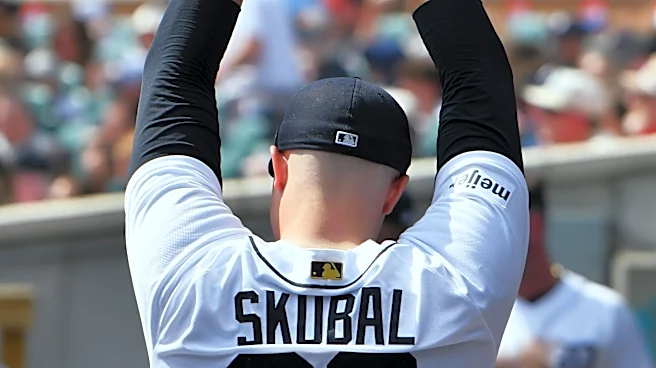
Tarik Skubal, a two-time Cy Young Award winner with a 2.42 ERA over the past three seasons, is considered the top free agent pitcher in the 2026-27 MLB class. Given the current state of pitching, where
it's increasingly difficult for starters to consistently pitch deep into games, an 'ace' like Skubal is a highly coveted asset. Projections suggest Skubal could command a contract upwards of $300 million. A comprehensive analysis categorizes all 30 MLB teams into tiers based on their likelihood of signing Skubal, along with their potential backup pitching plans. Teams like the Los Angeles Dodgers, New York Mets, and San Diego Padres are listed among the favorites, largely due to their financial capacity and urgent need for top-tier pitching. Conversely, teams with limited payroll flexibility or those that historically avoid large free-agent contracts, such as the Colorado Rockies and Oakland Athletics, are deemed to have 'absolutely no shot.'
Why It's Important?
The pursuit of Tarik Skubal highlights a significant trend in MLB: the escalating value of elite starting pitching. In an era where pitcher workloads are managed more carefully and 200-inning seasons are rare, a durable and dominant ace can fundamentally transform a team's rotation and playoff aspirations. The potential $300 million-plus contract for Skubal underscores the financial commitment teams are willing to make for such talent, reflecting the competitive landscape and the high stakes of securing a championship-caliber roster. This free agency period could also influence future labor negotiations, particularly regarding salary caps and floors, as teams with varying financial structures compete for top players. The outcome of Skubal's signing will not only impact the immediate fortunes of the acquiring team but also set a benchmark for future pitcher contracts across the league.
What's Next?
As the 2026-27 MLB free agency period approaches, teams will intensify their efforts to court Tarik Skubal. The Los Angeles Dodgers are positioned as the favorites, with the New York Mets and San Diego Padres also strong contenders, indicating a potential bidding war among high-spending franchises. Teams in lower tiers will focus on their backup plans, targeting other available starters or bolstering their bullpens. The financial implications of a potential new labor deal, including a possible salary cap, could significantly alter how these high-value contracts are structured and how teams approach free agency. The decision by Skubal will likely be influenced by both financial offers and the competitive outlook of the interested teams, as he seeks a club dedicated to winning a World Series. The resolution of his free agency will be a major storyline shaping the upcoming MLB season.
Beyond the Headlines
The intense competition for a player like Tarik Skubal reveals deeper economic and strategic considerations within MLB. The disparity in financial power among teams, as evidenced by the tiered analysis, raises questions about competitive balance and the long-term health of the league. While some teams can afford to pursue 'generational' talents, others are forced to rely on more modest acquisitions or player development. This dynamic can lead to cycles of dominance by wealthy franchises, potentially impacting fan engagement and the overall appeal of the sport. Furthermore, the increasing specialization and management of pitchers' workloads reflect evolving sports science and injury prevention strategies, which are reshaping how teams build and utilize their pitching staffs. Skubal's eventual contract will not just be a number; it will be a statement about the current and future valuation of pitching in professional baseball.